.svg)
.svg)
.svg)

A Certified Development Company (CDC) is a nonprofit organization certified by the U.S. Small Business Administration to provide the SBA-backed portion of a 504 loan. It works alongside a bank to fund up to 90% of a commercial real estate or equipment purchase, giving small businesses access to long-term, fixed-rate capital that many banks won’t offer alone.
TL;DR:
- Most CDCs operate within a specific state, so verify their coverage matches your project location before proceeding.
- Finding a CDC with PCLP status can significantly speed up processing and closing times for your loan.
- Eligible projects must involve long-term fixed assets like real estate or machinery, excluding operational expenses, inventory, or speculative investments.
- The typical 504 loan process takes 45 to 75 days but can extend beyond 90 days for complex or environmental review requirements.
- Working with an experienced local CDC with a strong track record increases the chances of a smooth and timely loan approval.
A CDC is a private, nonprofit corporation licensed and regulated by the SBA specifically to promote economic development in its community. Unlike a bank, a CDC doesn’t take deposits or chase profit margins. Its entire mission, written into its SBA certification, is to help small businesses grow, create jobs, and strengthen local economies through the SBA 504 loan program.
Certification isn’t automatic. To qualify, an organization has to meet a specific set of governance standards under the SBA’s CDC Certification Guide, including:
CDCs also operate within a broader professional network. The National Association of Development Companies (NADCO) serves as the industry’s trade association, offering training and shared best practices that help CDCs stay consistent with SBA rules while serving borrowers efficiently.
A 504 loan splits financing three ways, and each party carries a different piece of the risk. A bank or credit union typically funds around 50% of the project in a senior lien position. The CDC, backed by an SBA-guaranteed debenture, covers roughly 40%. The borrower puts down the remaining 10% or more, often higher for startups or single-purpose buildings.
By the numbers: 504 loans generally cap out at $5 million, rising to $5.5 million for certain manufacturers and energy-efficiency projects. Real estate terms run up to 25 years; equipment terms max out at 10 years, both at fixed rates.
That structure matters to banks as much as to borrowers. Because the bank holds first lien position on a smaller share of the loan, its risk exposure drops, and the loan is often easier to sell on the secondary market. Underwriting isn’t split into two disconnected processes, either. The bank and the CDC coordinate on appraisals, environmental review, and closing documents so both halves of the loan fund together rather than in separate stages.
Eligibility hinges on two things: the size of the business and how the money gets used. Borrowers generally need to be for-profit U.S. companies with a tangible net worth under SBA thresholds and average net income within program limits. Nonprofits don’t qualify, and neither do businesses looking to fund day-to-day operations.
Permitted uses focus on long-life, fixed assets:
What doesn’t qualify is just as important to know. Working capital, inventory financing, and speculative real estate investment all fall outside 504 eligibility. A manufacturer buying its own building and installing new production equipment is a textbook 504 project. A restaurant chain seeking cash to cover payroll during a slow season is not.
Finding a legitimate CDC starts with one resource: the SBA’s own registry.
Pro Tip: Ask the CDC directly how many 504 loans it closed in the past year and in your specific industry. A CDC with deep experience in your project type will spot underwriting issues before they become closing delays.
Come prepared with financial statements, a project budget, and proof of the property’s intended occupancy. Missing paperwork is the single biggest cause of stalled applications.
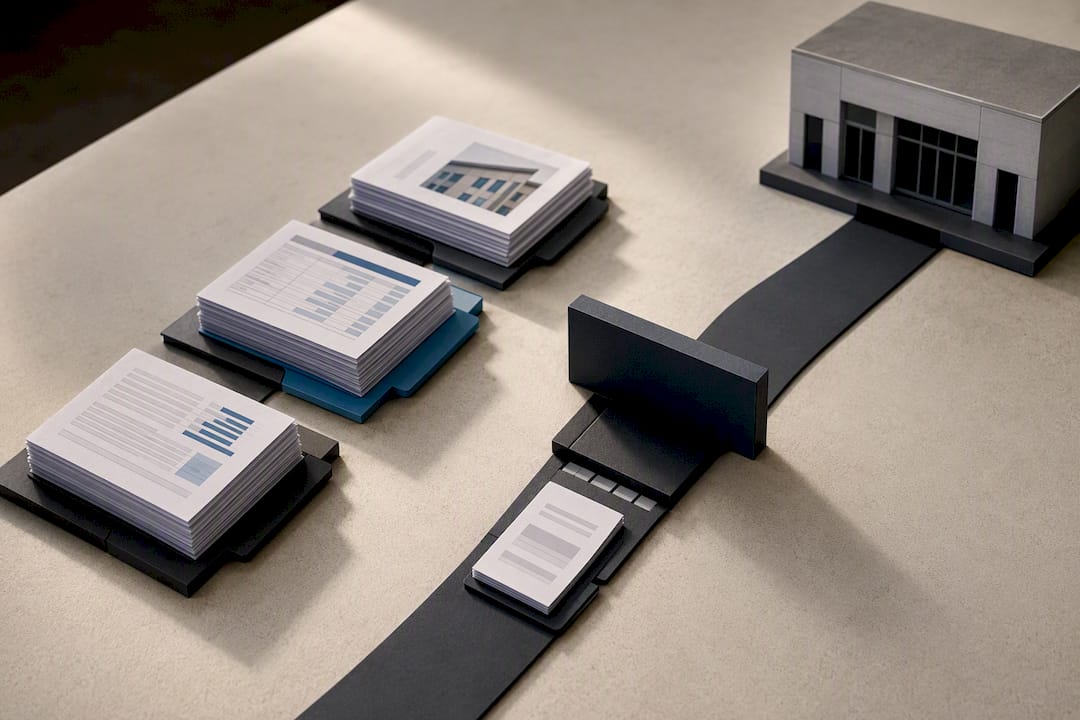
A 504 loan moves through four phases: application, underwriting, closing, and debenture sale. Most straightforward projects close within 45 to 75 days of a complete application, though complex construction deals or environmental reviews can push that timeline past 90 days.
Cost snapshot: Borrowers typically cover CDC processing fees, SBA guarantee fees, appraisal and environmental report costs, and legal or closing fees, which together usually run a few percentage points of the total project cost and are often rolled into the financed amount.
A few practical habits shave real time off the schedule:
The Florida Business Development Corporation has operated as a certified CDC for more than 35 years, giving it a long track record of packaging and closing 504 loans across the state. Its offerings go beyond the standard 504 structure to cover several borrower situations:
FBDC coordinates directly with participating banks to keep documentation moving in one direction rather than two, which is the same practical habit that speeds up any 504 closing regardless of which CDC handles it.
Working with a CDC isn’t just a financing mechanic. It’s a partnership rooted in a mission that traditional lenders don’t share: growing local jobs and keeping capital circulating in the community where a business operates. Borrowers get long-term, fixed-rate capital they’d struggle to secure otherwise, and banks get a way to participate in deals at a lower risk exposure. If you’re weighing whether a 504 loan fits your next project, start by reaching out to a certified CDC or your local SBA district office. That conversation costs nothing and tells you fast whether your project fits the program.
— PHENYX
Reading about the 50/40/10 structure is one thing. Getting a bank and a CDC to actually coordinate on your timeline is another, and that’s where FBDC’s three-plus decades in Florida SBA 504 lending make a practical difference for borrowers who don’t want to manage two separate processes themselves.
If you’re weighing a 504 loan against a traditional bank loan, the comparison of 504 loans and traditional commercial loans is worth a look before you apply. When you’re ready to see numbers specific to your project, run them through the 504 loan calculator or visit the SBA 504 Loan Program page to start a preliminary eligibility check with FBDC’s team.
CDCs work alongside banks to finance commercial real estate and long-life equipment for small businesses, and you can find one authorized in your state through the SBA’s official CDC directory.
Yes, an SBA 504 loan is repaid just like any other commercial loan, with fixed monthly payments over terms up to 25 years for real estate or 10 years for equipment. The SBA guarantee reduces risk for the lender, but the borrower remains fully responsible for repayment.
SBA lending volume shifts by year and by program, and the SBA’s own reporting is the most reliable source for current rankings rather than any single guide’s estimate. For 504 loans specifically, borrowers are better served checking the SBA’s CDC directory for an active, experienced CDC in their state rather than chasing a national volume ranking.
Monthly payments depend entirely on the interest rate, term length, and loan structure, so there is no single fixed figure that applies across all 504 loans. FBDC’s 504 loan calculator lets you plug in your own project numbers to get a realistic estimate before you apply.
Start with the SBA’s certified CDC list and confirm the CDC operates in your state, then compare experience with projects like yours, PCLP status, and responsiveness. Some CDCs bring extensive experience with 504 lending and offer multiple loan programs designed for different borrower situations.

