.svg)
.svg)
.svg)
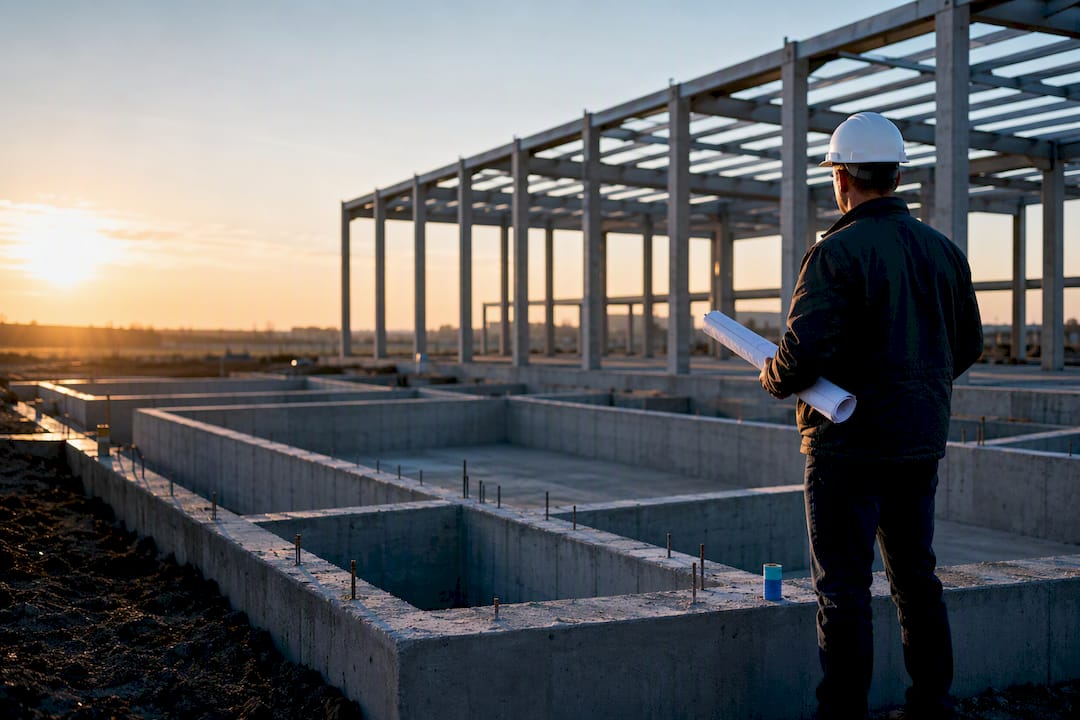
Construction, or interim, financing pays your contractor as work gets done, and it has to come from a non-SBA source that the CDC accepts. The permanent SBA 504 debenture is the long-term, fixed-rate takeout that replaces that interim debt once the building is finished and certified. Your borrower contribution runs at least 10%, and the debenture covers up to 40% of the project as a junior lien behind the third-party lender. Getting from one to the other cleanly means looping in your CDC, interim lender, and contractor before ground ever breaks.
TL;DR:
- Interim loans hold the first lien during construction, with rates floating based on market conditions, whereas the permanent debenture offers long-term fixed payments.
- The SBA 504 project capital stack requires at least 10% borrower contribution, up to 40% coverage by the debenture, and the rest financed by a third-party lender.
- All project costs must include hard construction, professional fees, and a contingency reserve capped at 10%, with strict certification and documentation before closing.
- Early engagement with the CDC, timely financial statements, and thorough lien-waiver management are key to avoiding delays and funding gaps.
- Using coordinated financing programs like Fbdc’s bridge loans and assistance options can streamline interim-to-permanent transitions and reduce operational bottlenecks.
These two loans solve different problems, and confusing them is where most first-time borrowers stumble. Interim financing exists to pay progress bills as your building goes up. Permanent SBA 504 financing exists to give you a stable, amortized payment on the finished asset for the next 10, 20, or 25 years.
The lien position flips between the two phases, which is the whole point of the structure:
One more rule trips people up: the money funding your interim draws cannot itself come from an SBA-backed source. Federal regulation requires the interim lender to be a non-SBA entity that’s acceptable to the SBA and capable of monitoring construction draws, a requirement spelled out in 13 CFR Part 120’s interim financing subpart. Miss that detail and you can jeopardize the entire permanent takeout.
Every 504 project rests on three pieces of capital, and each has a specific job. Your contribution covers at least 10% of total project cost (more for special-use facilities or startups). The CDC debenture fills a substantial portion of the project cost. The third-party lender, often a bank, covers the remaining balance and typically holds the senior lien position permanently.
Capital stack, at a glance: Borrower contribution (10%+) + CDC debenture (up to 40%) + third-party loan (remainder). The interim lender bridges the gap until the debenture funds, and in many cases it’s the same institution that later becomes your third-party permanent lender.
What counts as an eligible cost matters just as much as the percentages. Under 13 CFR §120.882, eligible project costs include:
Before the CDC can issue the debenture, several certifications have to land in the file. The interim lender must certify the exact amounts disbursed during construction. Your financial statements need to be current, generally within 120 days of closing, per 13 CFR §120.890. None of this is optional paperwork, it’s the mechanism that converts interim debt into permanent financing. And because SOP 50 10 governs current origination and underwriting standards for both 7(a) and 504 loans, always confirm requirements with your lender or CDC rather than relying on last year’s checklist.
Getting to permanent closing means clearing a set of operational hurdles that catch borrowers off guard more often than the financing math does.
Pro Tip: Keep a running log of every change order the moment it happens, with dollar impact noted. A $40,000 slip that surfaces at the final walkthrough is a fire drill; the same number tracked from week one is just a budget line.
The path from pre-authorization to debenture issuance follows a fairly predictable sequence: pre-authorization, interim closing and construction draws, completion inspections, final certifications, then debenture funding. Knowing where deals stall lets you plan around the risk instead of reacting to it.
The real risk triggers are a material adverse change in your finances, an incomplete project at inspection, or missing lien waivers and certifications. Every one of these is preventable with early CDC engagement, a conservative budget that assumes at least one unexpected cost, and a lien-waiver process your contractor understands from day one, not one you explain to them mid-project.
Do this work before you sign a construction contract or place a major equipment order, not after.
A well-vetted general contractor makes every one of these steps easier, and outside resources on construction contractor verification cover the kind of due diligence worth doing before you sign.
Pro Tip: Run your numbers through a 504 loan calculator before you finalize the interim loan amount. Seeing the permanent payment early keeps the construction budget honest.

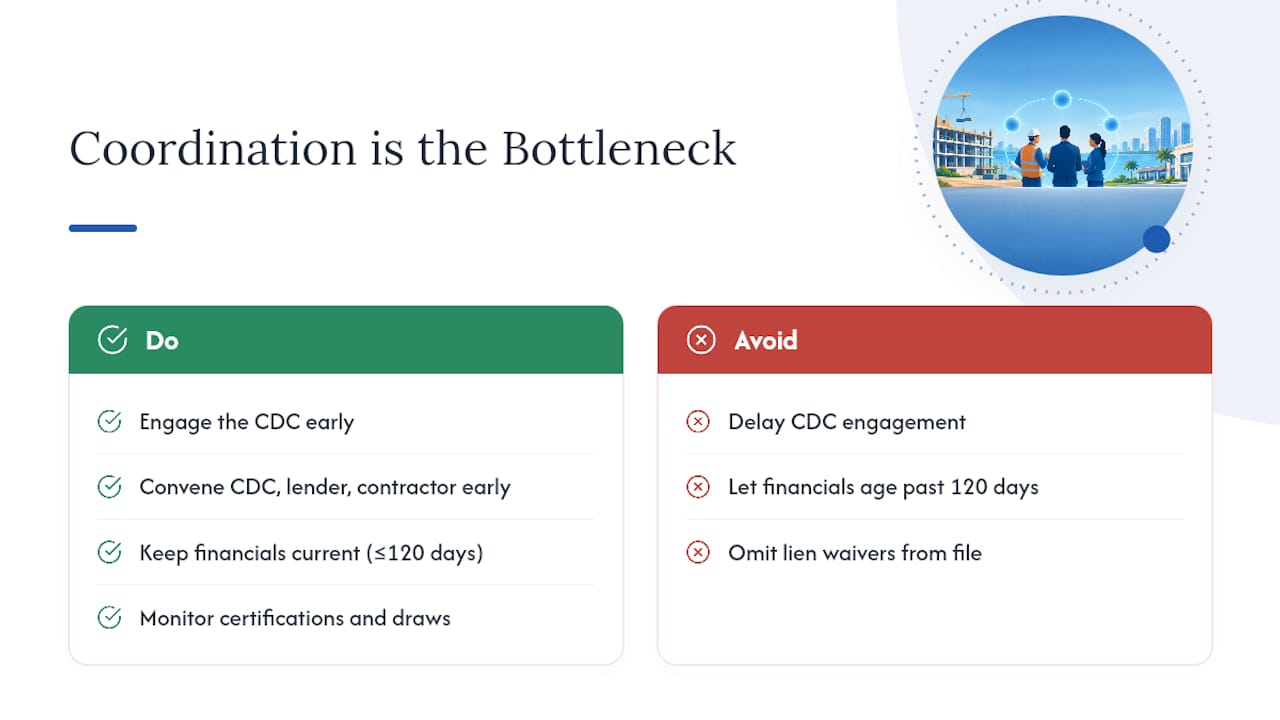
Most interim-to-permanent 504 deals that stumble don’t stumble on money, they stumble on timing and paperwork. A borrower with plenty of equity and a qualified contractor can still watch a closing slip three months because financials aged past the 120-day window or a lien waiver never made it into the file.
The pattern across many stalled SBA 504 deals often involves delayed engagement with the CDC. Bringing the CDC, interim lender, and contractor to the same table before the first draw request, not after the third one, is the single highest-leverage move a borrower can make. The math on a 504 deal is usually the easy part. The operational discipline of certifications, draw monitoring, and financial currency is where deals actually get won or lost.
— PHENYX
This provides a direct path for small business owners seeking coordinated CDC and interim financing from the start rather than addressing issues after they arise. The SBA 504 Loan Program provides the permanent debenture structure at the center of this article, with down payments as low as 10% and long-term fixed rates that give you payment certainty once construction wraps.
If your project needs a bridge before the debenture funds, the FBDC 504 Velocity Bridge Loan Program is built to keep draws moving without waiting on a separate bank relationship to fall into place. Fbdc also offers a Down Payment Assistance Program for borrowers who need help covering that owner contribution, along with direct lending for smaller equipment and real estate needs. Early contact with your CDC and coordinated support can help manage communications among involved parties during the loan process. Visit the SBA 504 loan program page to see approximate fees and request a consultation before you sign a construction contract.
This article is general information, not a substitute for advice from a qualified financial advisor. Consult a qualified financial professional about your own circumstances before acting on anything here.
Construction (interim) financing pays your contractor during the build and must come from a non-SBA source acceptable to the CDC. The permanent SBA 504 debenture is the long-term, fixed-rate loan that takes out that interim debt once the project is complete and certified, per 13 CFR §120.890.
The CDC debenture typically covers up to 40% of eligible project costs. The remainder splits between your owner contribution (at least 10%) and a third-party lender loan that usually holds the first lien.
Eligible costs include hard construction costs, professional fees like appraisal and environmental review, and a contingency reserve capped at 10% of construction cost to absorb overruns.
Yes, the same institution can serve as both interim lender and later the third-party permanent lender. It still has to meet interim financing requirements and certify disbursed amounts to the CDC before the debenture issues.
Yes, the FBDC 504 Velocity Bridge Loan Program is designed to support interim funding needs alongside the standard SBA 504 permanent structure. Pricing details are available directly on Fbdc’s site rather than published as a flat rate.

