.svg)
.svg)
.svg)

Most Florida businesses buying or leasing equipment will fit into one of three routes: a conventional equipment loan for shorter-lived assets, a lease when flexibility beats ownership, or an SBA 504 loan when the machinery or vehicle has a long useful life and a real price tag. Gather your last two years of financials and an equipment quote, then talk to a local lender or FBDC before you sign anything.
TL;DR:
- Equipment loans typically have terms of 36 to 60 months for vehicles and standard machinery, while heavy equipment financing can extend beyond 60 months with SBA 504 loans.
- Florida lenders favor a minimum of two years in business, with higher credit scores and strong cash flow, especially for SBA 504 projects that often require detailed business plans.
- Down payments for equipment financing vary: leases often require no upfront cost, conventional loans depend on collateral, and SBA 504 loans usually have low down payments around 10%.
- SBA 504 loans are ideal for long-lasting, capital-intensive equipment, offering fixed rates and financing that covers both machinery and real estate, with typical approval times of four to eight weeks.
- Fast dealer financing can close within days for smaller or straightforward purchases, but the longer-term cost-efficiency of SBA 504 makes it better for equipment expected to last a decade or more.
An equipment loan puts the asset on your balance sheet from day one. You borrow a set amount, make fixed payments, and own the equipment outright once the note is paid off. A lease (operating or capital) keeps the asset off your books in some structures, trades ownership for flexibility, and often costs less upfront. SBA 504 loans sit in a different category entirely: they finance heavy machinery and long-life equipment, often bundled with the real estate that houses it, with a fixed rate locked in for the life of the loan.
The right fit usually comes down to how long you’ll use the thing and how it depreciates.
Florida’s economy makes these distinctions concrete. A Tampa construction outfit buying a $180,000 excavator is a textbook SBA 504 case. A Fort Lauderdale restaurant financing a walk-in cooler and kitchen line might blend a short-term lease with a small equipment loan. A Lakeland trucking company adding three tractor units probably wants a conventional commercial loan with a shorter term matched to resale value.
Lenders evaluate three things first: how long you’ve operated, how your books look, and what you’re pledging as collateral. Most banks want at least two years in business, though some equipment-specific lenders will work with 12 months if cash flow is strong. Personal credit scores in the high 600s to low 700s open the most doors; SBA 504 underwriting tends to weigh business cash flow and debt-service coverage more heavily than a single credit number.
Requirements shift by product. Leases can be more forgiving on time-in-business since the lender retains ownership as security. Conventional loans lean on debt-service coverage ratios, usually wanting cash flow to cover payments by a comfortable margin. SBA 504 projects require a solid business plan and often a personal guarantee from anyone owning 20% or more of the company.
Have these ready before you apply: two years of business and personal tax returns, a current profit-and-loss statement, a balance sheet, the equipment invoice or vendor quote, a government-issued ID, your business license, and a personal financial statement.
Term length tracks the equipment’s useful life, and Florida lenders build their products around that logic. Local bank landing pages commonly bucket equipment loans into three ranges: short terms of 12 to 36 months for technology and light-use equipment, medium terms of 36 to 60 months for vehicles and standard machinery, and long terms of 60 months or more for heavy equipment and assets tied to real estate, where SBA 504 usually takes over.
Down payments vary just as widely:
Estimated payment example: a $50,000 piece of equipment financed over a typical term at a fixed rate in a moderate percentage range results in a monthly payment that can help plan budgets, though actual payments vary by term and rate. Shorter terms result in higher monthly payments but lower total interest paid.
Two alternatives worth knowing: a sale-leaseback, where you sell owned equipment to a lender and lease it back to free up cash, and refinancing existing equipment debt when rates drop or your business qualifies for better terms than it did originally.
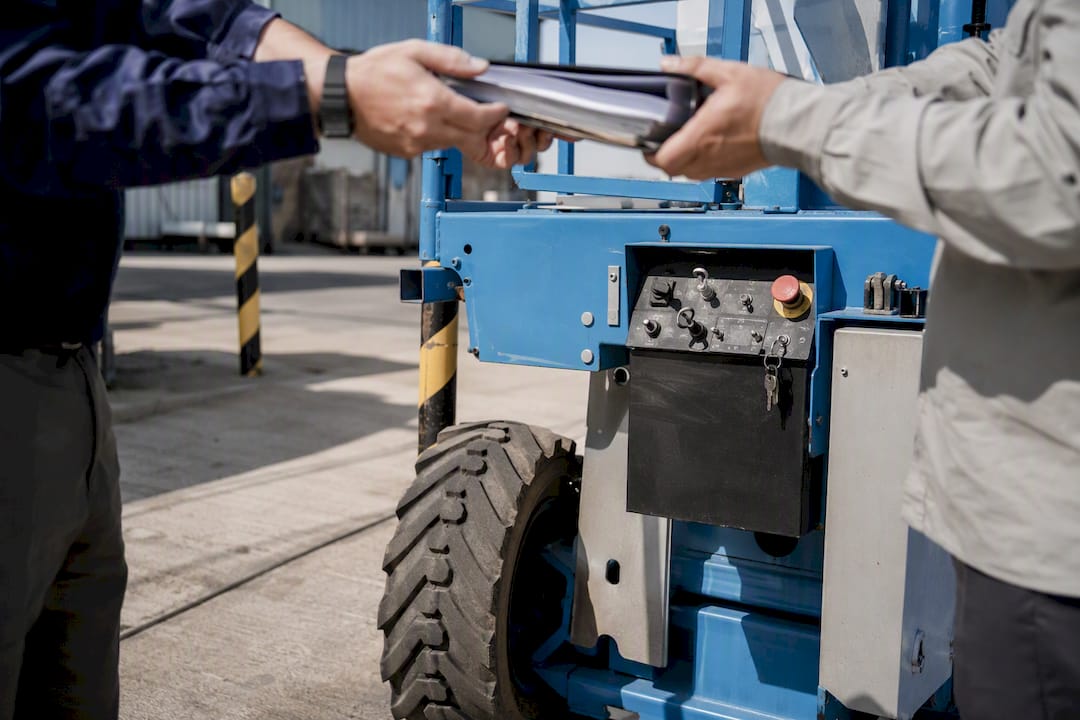
The sequence is the same whether you’re financing a $30,000 forklift or a $2 million production line, only the underwriting depth changes.
Timelines diverge sharply by product. Dealership and application-only financing can close in days, sometimes same-day for straightforward equipment loans under six figures. SBA 504 projects take longer, often four to eight weeks, because the loan structure involves both a bank and a Certified Development Company, and larger projects may include real estate components that need appraisal and title work.
Pro Tip: Call a local relationship manager before you submit paperwork, not after. A five-minute conversation about your specific equipment and timeline often saves weeks of back-and-forth once your file is in underwriting. Explore FBDC’s SBA 504 loan requirements for Florida small businesses to see exactly what a project file needs before you start.
SBA 504 was built for exactly this kind of purchase: assets that last, cost real money, and are hard to finance cheaply through a standard commercial loan. The program offers a down payment as low as 10%, a fixed rate for the full term, and financing that can cover heavy machinery alongside the real estate it sits on.
SBA 504 works best when equipment has a useful life matching the loan’s long-term structure, typically ten years or more. For a Florida manufacturer or logistics company buying equipment that will still be running in 2036, the fixed rate alone can outweigh a faster but pricier dealer loan over the life of the asset.
FBDC has run SBA 504 projects for Florida businesses for more than 35 years, with servicing focused specifically on this state’s manufacturers, construction firms, agricultural operations, and commercial property owners. Businesses buying industrial equipment, cold storage, or manufacturing lines tend to benefit most, especially when the purchase is large enough that a 10% down payment materially changes what’s affordable. Readers in South Florida can see how this plays out locally in why SBA 504 beats traditional loans for Dade County businesses.
Speed and cost pull in opposite directions more often than owners expect. A dealer loan gets equipment on-site fast but usually costs more over time. SBA 504 costs less over a decade but takes longer to close. For a fleet buy or restaurant fit-out, fast financing usually wins. For production equipment with a 10-plus-year life, take the extra weeks and talk to FBDC first.
— PHENYX
If your business needs heavy machinery, manufacturing equipment, or commercial real estate to house it, FBDC gives you a direct path that most conventional lenders can’t match: a down payment as low as 10% and a fixed rate locked in for the life of the loan, backed by more than 35 years of Florida-focused SBA 504 lending.
FBDC’s team works with Florida manufacturers, construction firms, agricultural operations, and commercial property owners to structure SBA 504 projects from application through funding. Beyond 504 loans, FBDC also runs a direct lending program for smaller financing needs and businesses that don’t fit the SBA 504 mold. If you’re ready to see how the numbers work for your equipment purchase, start with FBDC’s 6-step SBA 504 process to see exactly what documentation you’ll need and how quickly your project could move to closing.

