


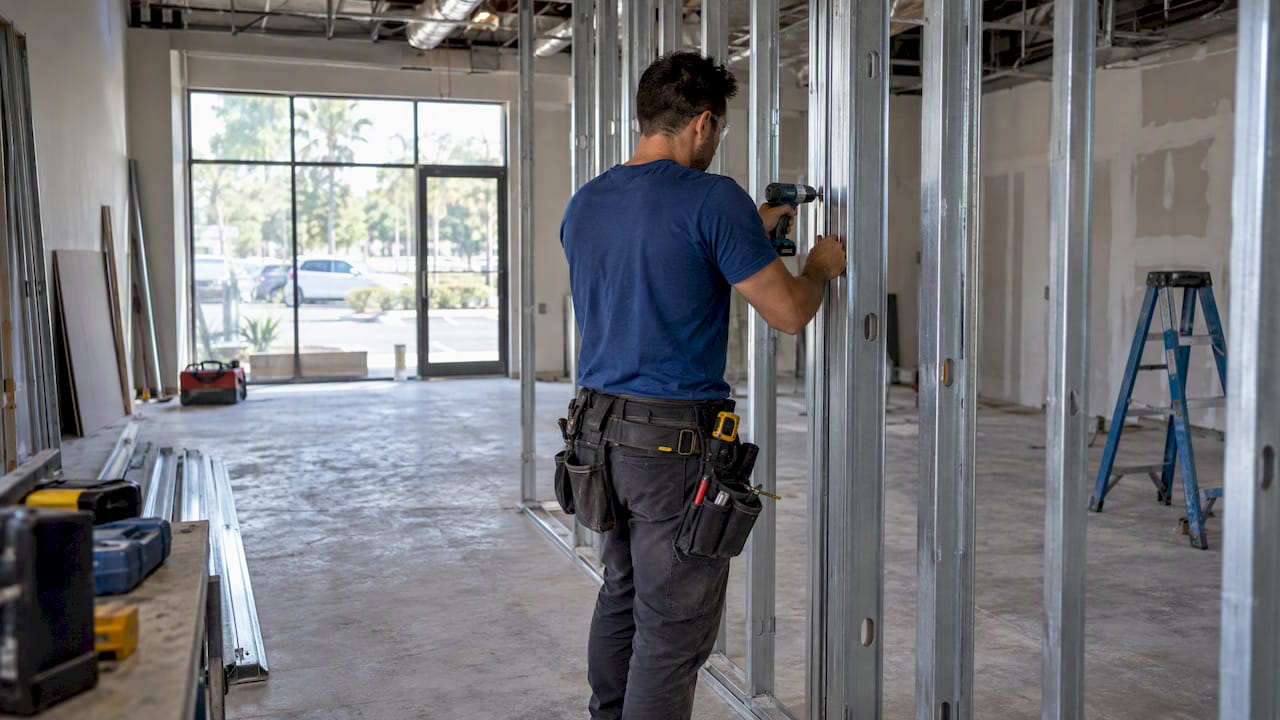
Leasehold improvements can be financed through landlord tenant improvement (TI) allowances, SBA 504 loans for the real-estate-related portion of a build-out, flexible SBA 7(a) or commercial construction loans, and short-term bridge financing to cover contractor draws while waiting on reimbursement. The right starting point is confirming what your landlord will fund and when, then matching a lender to your lease term and project size.
Fbdc
Explore SBA 504 Financing
FBDC specializes in SBA 504 lending for businesses financing real estate-related improvements, with expert guidance throughout the loan process.
Landlord-funded TI means your lease includes an allowance the property owner pays toward construction, usually disbursed on a per-square-foot basis or against documented invoices. Tenant-funded financing covers the gap when that allowance falls short, or when no allowance exists at all. Several lending categories can fill that gap, each suited to different project sizes and timelines.
Matching the category to your situation starts with lease length: a five-year lease rarely justifies a 20-year loan term, while a 15-year lease can support longer, fixed-rate structures.
Each lending program finances leasehold improvements differently, and the differences matter when you are choosing where to apply.
SBA guidance also permits loan terms to track how proceeds are used: leasehold improvement financing can run up to 10 years, plus reasonable time to complete the work, and maturities can blend up to 25 years when more than half the proceeds go toward longer-term eligible uses. That rule makes combined construction-and-equipment financing workable for many tenants rather than forcing two separate loans.
If you are comparing lenders beyond a single program, a marketplace like Formosity Funding can surface multiple offers at once, which is useful when you want to see where SBA and conventional terms land side by side.
Pro Tip: Match your loan term to the useful life of what you are financing. Structural improvements with a 15-year life rarely belong on a 5-year note.
A TI allowance is negotiated as part of the lease, usually expressed as a dollar amount per square foot, with a cap on total landlord spending. Some leases go further with a turn-key arrangement, where the landlord manages and pays for the entire build-out before handing over finished space.
That reimbursement timing is where many tenants run into trouble. Contractors expect payment on a draw schedule, but landlord reimbursement often lags weeks or months behind substantial completion. That gap is exactly where bridge financing becomes useful, covering draws now and getting repaid once the landlord check clears or a permanent loan closes.
Tenants who pay for capital improvements to leased property can generally depreciate those costs, rather than deducting them immediately as a repair. IRS Publication 946 draws the line between a repair, which is expensed, and a betterment or structural change, which must be capitalized and depreciated over time.
As of January 2026, Treasury and the IRS made the 100% additional first-year bonus depreciation permanent for qualifying property placed in service after January 19, 2025, while allowing taxpayers to elect out. That permanence gives tenants more certainty when deciding whether to accelerate a deduction or spread depreciation over a longer schedule, a choice best made with your tax advisor rather than assumed from general guidance.
Lenders move faster when your paperwork is ready before you apply. The core documents include the lease excerpt showing your TI clause and reimbursement terms, itemized contractor bids, a draw schedule, proof of contractor licensing, your business and personal financials, and any permits already issued.
The typical sequence runs in stages:
Budget for more than the contractor’s bid. Build in a contingency reserve, soft costs like architectural and permit fees, FF&E for fixtures and equipment, and a realistic timeline for permit review and inspections, which often run longer than contractors initially estimate.
Pro Tip: Ask your lender upfront what draw documentation they require, since missing lien waivers or inspection sign-offs are the most common reason draws get delayed.
We built our lending around the scenarios tenants actually face. For a long-term lease with substantial real-estate-related construction, our SBA 504 Loan Program is typically the fit, with fixed rates and down payments as low as 10% aligned to the useful life of the improvement. When timing is the problem rather than the financing structure, our FBDC 504 Velocity Bridge Loan Program covers draws while a permanent loan or landlord reimbursement is still in process. Smaller projects often fit better under a Direct Lending Program.

We focus on a streamlined approval process and direct guidance from application through funding. If you want to see where your project fits, reach out and we can walk through eligibility together.
Confirm your landlord’s TI allowance and reimbursement trigger first. That single conversation often determines whether you need outside financing at all. From there, choose a lender path that matches your lease length and the useful life of the asset, since a mismatch creates refinancing headaches later.
When cash is tight before reimbursement arrives, bridge financing usually solves the timing problem without forcing you into a loan term that outlives your lease. Loop in your CPA early so capitalization and depreciation are handled correctly from the start.
Whether you need long-term fixed financing for a major build-out, a bridge loan to cover contractor draws, or a smaller direct loan for a lighter scope, we have a program built around it. Our SBA 504 Loan Program pairs low down payments with fixed rates sized to the useful life of your improvements, backed by decades of SBA 504 processing experience.

Ready to see what fits your project? Request your eligibility review and we will walk you through financing options for your leasehold improvements.
This article is general information, not a substitute for advice from a qualified financial advisor. Consult a qualified financial professional about your own circumstances before acting on anything here.
Leasehold improvements are generally depreciated rather than amortized when you own the improvement as the tenant, following the capital improvement rules in IRS Publication 946. The distinction matters mainly for how the deduction is scheduled on your tax return, so confirm treatment with your tax advisor.
Yes. Tenants commonly finance leasehold improvements through landlord TI allowances, SBA 504 or SBA 7(a) loans, commercial construction loans, or short-term bridge financing, depending on project size and lease length.
Qualifying leasehold improvement property can be eligible for the 100% additional first-year bonus depreciation that Treasury and the IRS made permanent for property placed in service after January 19, 2025. Taxpayers can also elect out of the 100% deduction if a longer depreciation schedule better fits their tax planning.
Leasehold improvements are typically classified as property, plant, and equipment (PPE) on the balance sheet, since they represent a capitalized, long-lived investment in the space you occupy. For tax purposes, that same improvement is depreciated under the rules in Publication 946 rather than expensed immediately.

