.svg)
.svg)
.svg)

The SBA 504 closing is a CDC-led, two-stage process that ends with SBA debenture funding. Most borrowers can expect a two-stage process that runs roughly 60 to 120 days, longer when construction is involved. The two factors that determine whether you land on the fast or slow end are documentation completeness and how well your timeline lines up with the debenture sale schedule.
TL;DR:
- The SBA 504 closing process typically takes 60 to 120 days, with construction projects often extending the timeline due to additional documentation and inspections.
- Speeding up closing depends on both complete and accurate paperwork and aligning the file’s preparation with the scheduled debenture sale date.
- Using a Priority CDC and a designated attorney can reduce SBA review rounds and accelerate the closing timeline.
- Borrowers should proactively manage authorization extensions, coordinate with lenders for bridge financing, and verify sale dates to prevent delays.
- Key documents include authorization forms, loan instruments, property records, proof of costs, occupancy verification, and construction-related certificates.
Closing on a 504 loan is not a single event. It is a sequence of coordinated steps between your Certified Development Company (CDC), your interim lender, and the SBA, with each party responsible for distinct pieces of the file.
The borrower’s job is narrower than it looks: you supply accurate financial documents, signed authorizations, proof of paid invoices, and timely responses to CDC requests. The CDC and lender handle drafting, scheduling, and SBA communication. Two things reliably speed this up: working with a Priority CDC, which carries expanded closing authority, and using a designated attorney, which cuts down the amount of paperwork SBA needs to review before the sale. Construction projects add draw schedules, lien waivers, and completion certificates to the mix, which is why they tend to sit at the longer end of the 60 to 120 day range.
The checklist you are actually working against is the SBA Debenture Closing Checklist, Form 2286, or in a full file review, the 504 Debenture Closing Checklist for Complete File Review, Form 2303. Knowing which items belong on which form saves a lot of back and forth.
Designated-attorney closings only require the first eight items on Form 2286 for the initial submission, which is one reason those closings tend to move faster. A complete file review under Form 2303 asks for the fuller list, so borrowers on that track should expect a longer document-gathering phase.
Accountability in a 504 closing is split three ways. Under eCFR §120.960, the CDC carries primary responsibility for closing the loan and assembling the debenture package, while the debenture closing itself is a joint responsibility between the CDC and SBA. SBA retains the authority to decline, delay, or cancel the debenture guarantee if disclosure requirements were not met or the file does not comply with program rules.

This matters because it tells you where to direct questions. Document assembly issues go to your CDC. Funding timing and regulatory compliance questions go to SBA, often through the CDC as intermediary. Priority CDC status and designated-attorney arrangements shift some of that SBA review workload onto the CDC’s own legal team, which is the mechanism behind faster closings.
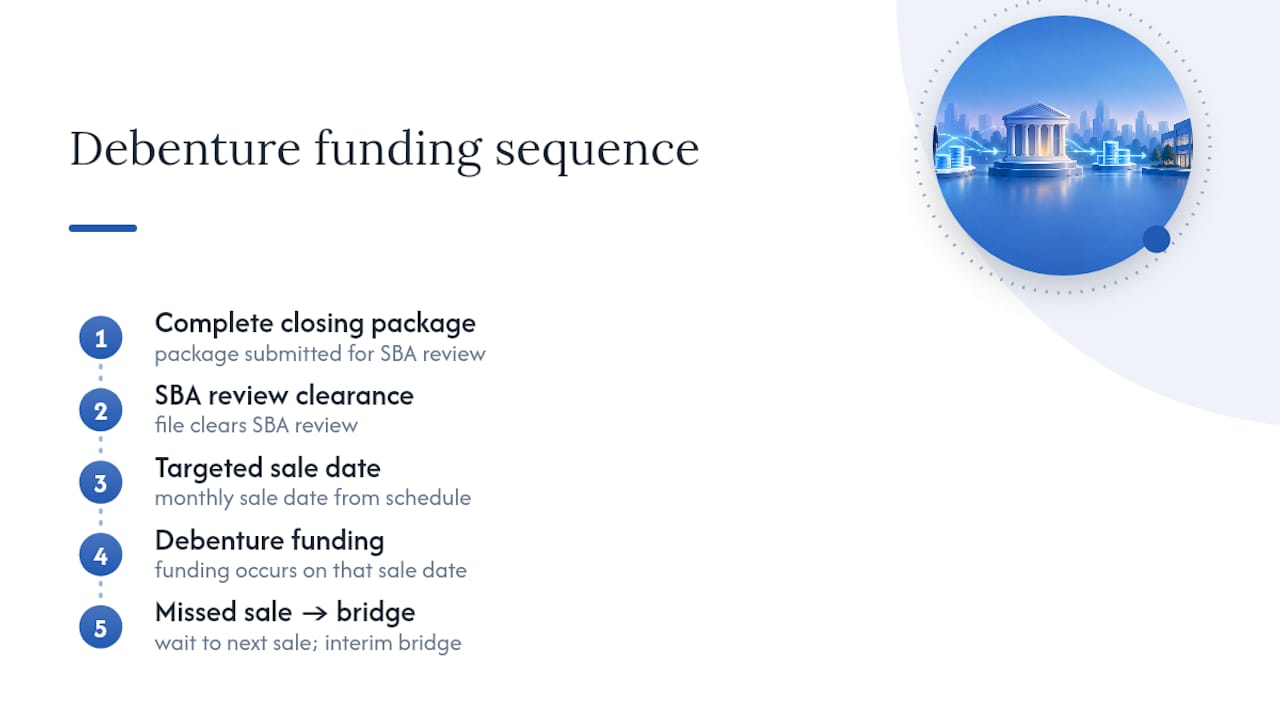
Even a flawless closing file does not fund on demand. Debenture funding follows the 504 debenture funding schedule, which pools debentures nationally and sells them on set monthly dates. A complete package that clears SBA review two days after a sale date has to wait for the next one.
Fact: the debenture funding schedule sets fixed monthly sale dates that every CDC and borrower must work around, regardless of how quickly the file was completed. Borrowers should ask their CDC early which sale date the file is targeting, request an authorization extension if there is any risk of missing it, and coordinate with the interim lender on how long bridge financing needs to stay in place if the date slips.
Most delays trace back to a small set of recurring problems, and nearly all of them are preventable with earlier attention.
Pro Tip: Run an internal pre-closing audit 14 to 21 days before your targeted debenture sale date, crosswalking every document against Form 2286 or 2303, so any gaps get fixed before SBA sees them.
Priority CDC status and designated-attorney closings do not change the paperwork requirements, they change who reviews it and how much SBA has to see before the sale. A designated attorney’s initial submission is limited to the first eight Form 2286 items, which means fewer rounds of SBA correction requests and a tighter path to the sale date.
Borrowers should ask their CDC directly: are you a Priority CDC, is a designated attorney closing this file, what is our targeted debenture sale date, and do we need an authorization extension. Ask what documents the CDC needs from you in the next seven days, since most delays come from borrower-side paperwork sitting untouched. An experienced CDC also manages authorization extensions proactively, coordinates timing with your interim lender so bridge interest does not run longer than necessary, and handles the post-sale collateral submission to the Central Loan Servicing Center without prompting.
The conventional advice on 504 closings focuses almost entirely on paperwork completeness, and that is only half the story. The other half is calendar awareness. A borrower with a perfect file but no plan for the debenture sale date will still wait, sometimes for weeks, while a borrower with a slightly less polished file who nailed down their sale date early can close sooner.
Most guides underweight the role of the CDC’s operational status. Whether your CDC has Priority designation and whether a designated attorney is closing your file changes how much SBA scrutiny happens before the sale, and that variable is often decided before the borrower ever sees a closing document. If there is one thing to prioritize, it is asking about CDC designation and targeted sale date in your very first closing conversation, not two weeks before you expect to fund.
None of this replaces diligence on the document side. But treat the calendar and the CDC’s closing authority as first-order variables, not afterthoughts.
— PHENYX
Experience managing SBA 504 closings enables effective handling of aspects of the process borrowers may not see, such as timely authorization extensions, coordination with interim lenders to manage bridge costs, and timely delivery of collateral packages to the Central Loan Servicing Center.
Working with FBDC on your closing typically involves:
If you are approaching closing on a 504 loan, or want help lining up your timeline with the next debenture sale date, review the SBA 504 Loan Program details and reach out to start the process.
Keep these on hand: Form 2286, Form 2303, eCFR §120.960, the SBA 504 program page, and the debenture funding schedule.
This article is general information, not a substitute for advice from a qualified financial advisor. Consult a qualified financial professional about your own circumstances before acting on anything here.
Yes. An SBA-backed loan is a personal and business obligation regardless of whether the business remains operating, and closing the business does not erase the debt. Lenders and the SBA can pursue repayment through any pledged collateral and, in many cases, personal guarantees signed at closing.
Most 504 loans allow early payoff, though the debenture portion often carries a prepayment premium that declines over time, similar to a bond call structure. Ask your CDC for the specific prepayment terms in your authorization before assuming there is no cost to paying early.
Closing typically takes 60 to 120 days from loan approval, with the range depending on documentation completeness and how the file aligns with the debenture sale schedule. Construction projects generally land at the longer end because of draw schedules and completion inspections.
Closing costs vary by project size and lender, and FBDC lists its approximate fees for its own 504 program on its site. Borrowers should also budget for potential interim lender bridge interest if the debenture sale date shifts past the original target.

