.svg)
.svg)
.svg)
SBA 504 construction financing works well for owner-occupied ground-up builds and major renovations, provided you can manage a two-phase loan process. The standard structure splits funding 50% bank, 40% Certified Development Company (CDC) debenture, and 10% borrower equity, but construction projects add a twist: you need an interim construction loan from your bank first, with the CDC/SBA 504 debenture arriving as permanent takeout financing later. Budget roughly 12 to 24 months from application to permanent funding.
TL;DR:
- SBA 504 construction loans require a separate interim bank loan during the build, followed by a delayed permanent debenture funding after obtaining the certificate of occupancy.
- The CDC debenture cap is $5 million for most projects, with higher limits for manufacturing or green energy projects, but the bank’s first mortgage can be unlimited in size.
- The typical timeline from application to permanent funding ranges from 12 to 24 months, depending on project complexity and pooling deadlines.
- Borrowers should coordinate land purchase, permits, and contractor arrangements early and align project milestones with CDC pooling schedules to avoid delays.
- Building a contingency fund of at least 10% and understanding the timing risks around appraisals and pooling windows are crucial for a smooth closing.
An SBA 504 construction loan runs on two separate financing phases, not one, as explained by Lending Gurus who clarify the roles of banks and CDCs in structuring these loans. That distinction trips up a lot of first-time borrowers who assume the debenture funds on day one.
Here’s the sequence:
Most 504 construction deals use this two-close approach because it lets the bank underwrite construction risk separately from long-term permanent risk. Single-close options exist, where the bank funds both the interim and permanent portions under one set of documents, but fewer lenders offer them and the paperwork upfront is heavier. Two-close remains the market standard, and understanding how SBA 504 loans finance new construction up front will save you from surprises at the CO stage.
The 504 program covers more than bricks and steel. Eligible uses include ground-up construction, building additions, major renovations, site work like grading and utilities, and soft costs such as architect fees, permits, and engineering studies. Long-life equipment tied to the project, machinery expected to last at least 10 years, can ride along in the same financing package rather than needing a separate loan.
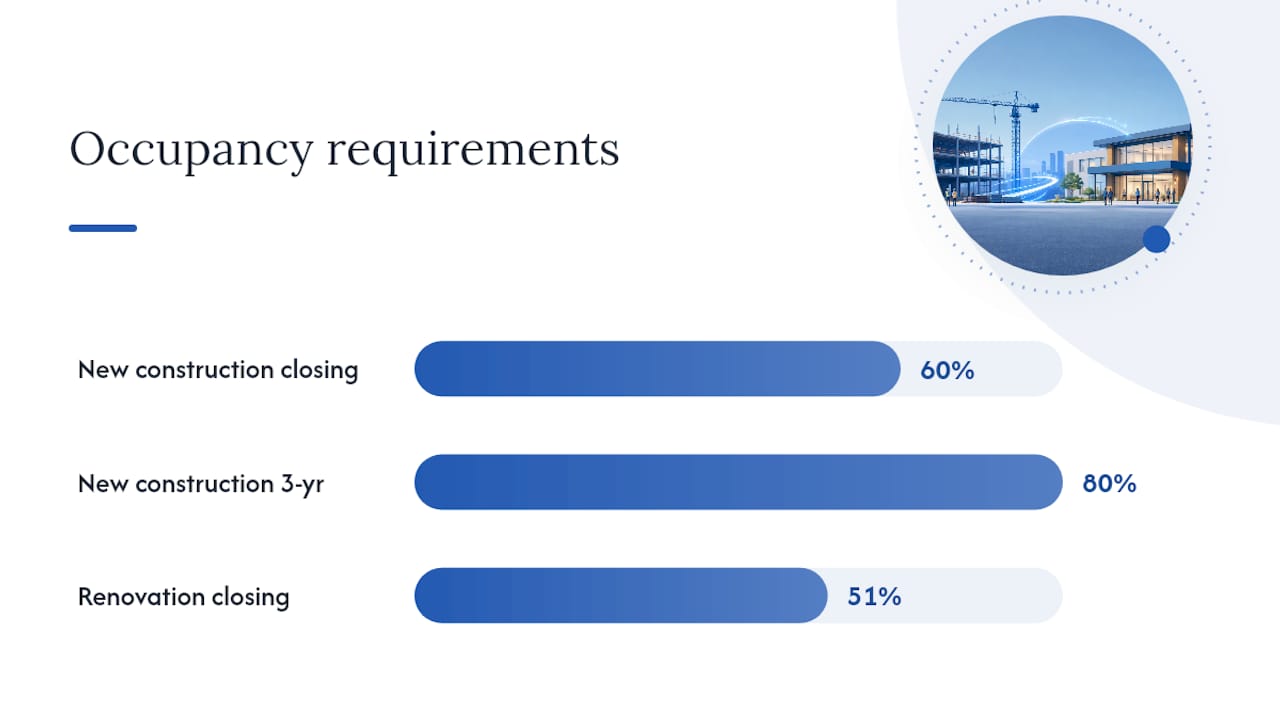
CDC debenture caps are $5 million for standard projects and can extend to $5.5 million for manufacturing operations or projects that meet green energy and public policy goals, according to the SBA’s own program rules. The bank’s first mortgage portion carries no cap, which is why large construction budgets still pencil out under 504 even when the debenture alone wouldn’t cover the full build.
Occupancy rules matter just as much as the dollar figures:
Plan for a longer runway than a conventional construction loan. Straightforward projects, think a single-tenant office build or a warehouse renovation, tend to run 12 to 18 months from application to permanent funding. Complex projects with environmental review, zoning variances, or multi-phase construction can stretch past 24 months.
A typical sequence looks like this:
During construction, your bank releases funds in draws tied to completed work, holding back retainage, commonly around 10% of each draw, until the project reaches substantial completion. That retainage protects the lender against unfinished punch-list items, but it also means less cash in hand for you until the very end, so plan your working capital accordingly.
Contractors need to bring real credentials to the table. Expect these requirements before closing:
CDCs and banks run a fairly standard set of financial checks before they approve a construction deal. Your business needs to meet SBA size standards, and depending on the loan structure, your CDC may apply a net worth or average net income test to confirm you qualify as a small business under SBA and CFR eligibility rules. Personal credit history and business cash flow projections matter too, since the bank is underwriting both the interim and permanent risk.
Expect to assemble a stack of third-party reports:
Add a construction contingency (5 to 10% of hard costs is typical), plus CDC and SBA guarantee fees rolled into the debenture, plus standard bank closing costs. Ordering these reports and documents early is one of the more consistent findings in lender-side guidance on avoiding delays.

The advantages are real, but so are the friction points, and knowing both before you sign a construction contract puts you in a stronger negotiating position with your bank and CDC.
What works in your favor:
What can slow you down or cost you more:
Pro Tip: Build your construction contingency at 10% rather than 5% if your project involves any site work with unknown subsurface conditions. Appraisal shortfalls and change orders are the two most common reasons construction 504 deals need extra borrower cash at the finish line.
The projects that close smoothly share a common trait: the borrower did the coordination work before signing anything.
Pro Tip: Ask your CDC directly which debenture pooling dates they’re targeting for your project. Missing a pooling window by even a few days can add a month or more to your permanent funding timeline.
Construction 504 loans have more moving parts than a standard real estate purchase, more inspections, more coordination between bank and CDC, more exposure to timing risk around pooling and completion appraisals. FBDC has specialized in SBA 504 lending for more than 35 years, working through a structured six-step process that keeps banks, borrowers, and the debenture timeline aligned. That kind of repetition matters when a single missed pooling window can cost a borrower a month of extra interim interest, and it’s the kind of coordination that turns a stressful construction closing into a routine one.
Most SBA 504 construction guides treat the program like a real estate purchase with extra steps. That’s the wrong mental model. A ground-up build or major renovation is a timing problem wrapped inside a financing structure, and the borrowers who struggle almost always underestimate the calendar, not the paperwork.
The conventional advice tells you to “get pre-qualified” and “gather your documents.” True, but incomplete. What actually separates a smooth construction 504 closing from a painful one is whether the borrower coordinated their contractor’s schedule against the CDC’s debenture pooling calendar from day one. A project that finishes construction two weeks before a pooling deadline closes on time. The same project finishing two weeks after can sit in limbo for a month, burning interim interest the entire time.
If you take one thing from this guide, prioritize the completion appraisal risk. A soft market at the wrong moment can leave you short on the permanent takeout even after flawless construction execution. Build contingency for that scenario specifically, not just for cost overruns.
— PHENYX
A dedicated CDC partner can pre-qualify your project, coordinate the interim loan with your bank, package your documentation, and manage the draw and pooling timeline through to permanent funding.
That coordination is exactly where construction deals stall when a borrower goes it alone, missed pooling windows, appraisal surprises, contractor documentation gaps. Experienced teams handling these moving parts can draw on extensive SBA 504 lending experience to assist across communities.
Two moves you can make right now: run the numbers on the 504 loan calculator to see how the 50/40/10 structure applies to your project, or request a pre-qualification conversation through FBDC’s proven six-step process to find out exactly what your timeline and equity requirement will look like.
Confirm current limits directly at the SBA’s 504 loan program page and review Title 13 CFR for eligibility rules, or consult America’s SBDC network for local guidance before you apply.

