.svg)
.svg)
.svg)
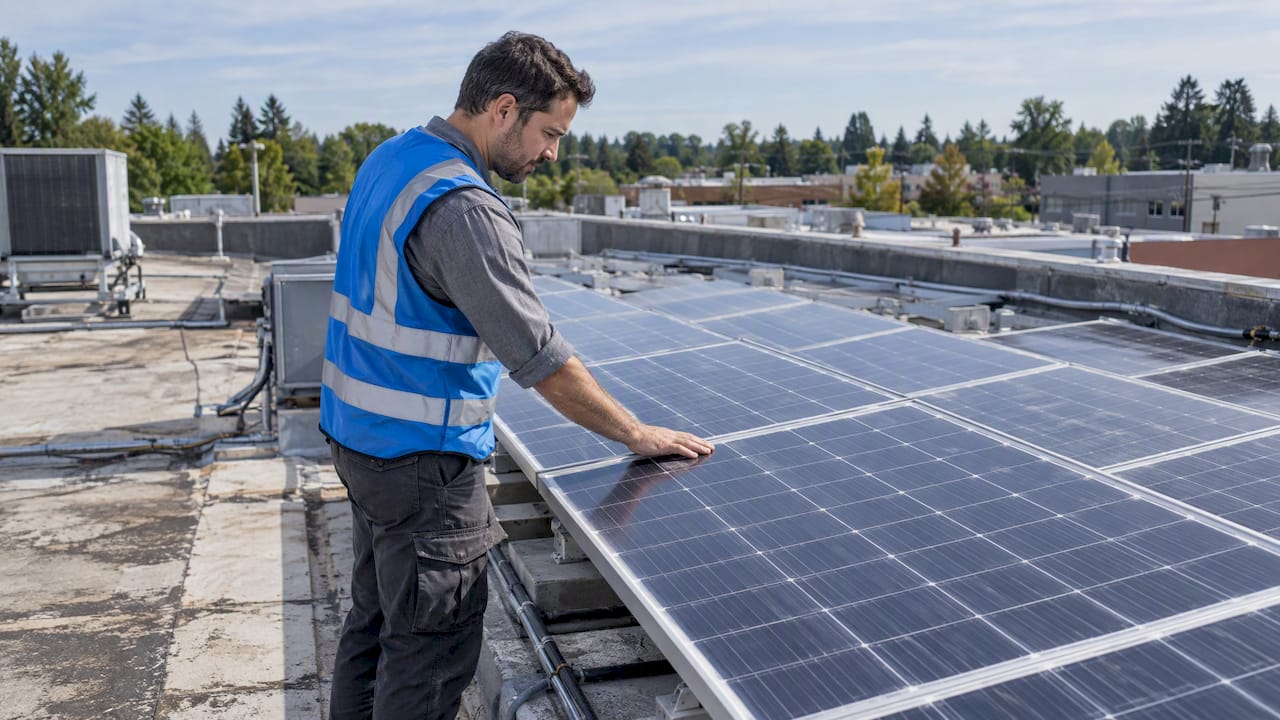
Qualifying small businesses can now finance up to $5.5 million per energy project through the SBA 504 Green program, with no aggregate cap limiting how many projects a business can pursue. That change, confirmed in SBA policy updates, makes large-scale energy-efficiency retrofits and on-site renewable installations far more financeable than they were before. If you’re planning a solar array, HVAC overhaul, or building envelope upgrade, this shift directly affects how much you can borrow and how fast you can move.
Fbdc
fbdc.net
Plan Your SBA 504 Financing
FBDC helps small businesses finance real estate, heavy machinery, and equipment through SBA 504 lending with expert guidance throughout the loan process.
In May 2024, the SBA removed the aggregate cap that previously limited total financing for Energy Public Policy Projects, and raised the SBA’s contribution ceiling to $5.5 million per qualifying project. A companion procedural notice updating SOP 50 10 7.1 formalized the removal of the $16.5 million aggregate cap and addressed debenture and disbursement timelines for these projects.
For business owners, this matters in practical terms:
This policy shift reflects a deliberate SBA push toward funding small-business clean energy transitions, removing what had been a real bottleneck for growing companies.
To qualify as an Energy Public Policy Project, your project must meet one of three criteria set by the SBA and detailed by Dena Energy’s breakdown of the program:
Beyond these green-specific thresholds, standard 504 eligibility still applies. Your loan must be originated through a certified development company, your business must operate for profit in the United States, and as of March 2026 SBA policy, applicants must be U.S. citizens or U.S. nationals with a principal residence in the country. Businesses owned in whole or part by foreign nationals are not eligible for 504 or 7(a) loans under this rule.
A common mistake is assuming informal savings estimates will satisfy these thresholds. They will not. The SBA and your CDC expect documentation tied to a recognized baseline, not a contractor’s rough projection.
Projects that typically meet Energy Public Policy criteria include solar photovoltaic arrays, HVAC system replacements, building envelope improvements like insulation and window upgrades, efficient lighting retrofits, and process equipment with a useful life of 10 years or more. Each of these can qualify under the reduction, generation, or sustainable design test, depending on scope.
Documentation matters as much as the project itself. Lenders and the SBA expect energy use expressed in standard units, kilowatt-hours for electricity and therms for gas, with a clear comparison between modeled and measured savings. An independent third-party energy audit or engineering report is generally required to verify compliance.
What separates an acceptable report from an informal estimate:
Investing in a strong audit upfront tends to speed up underwriting rather than slow it down.
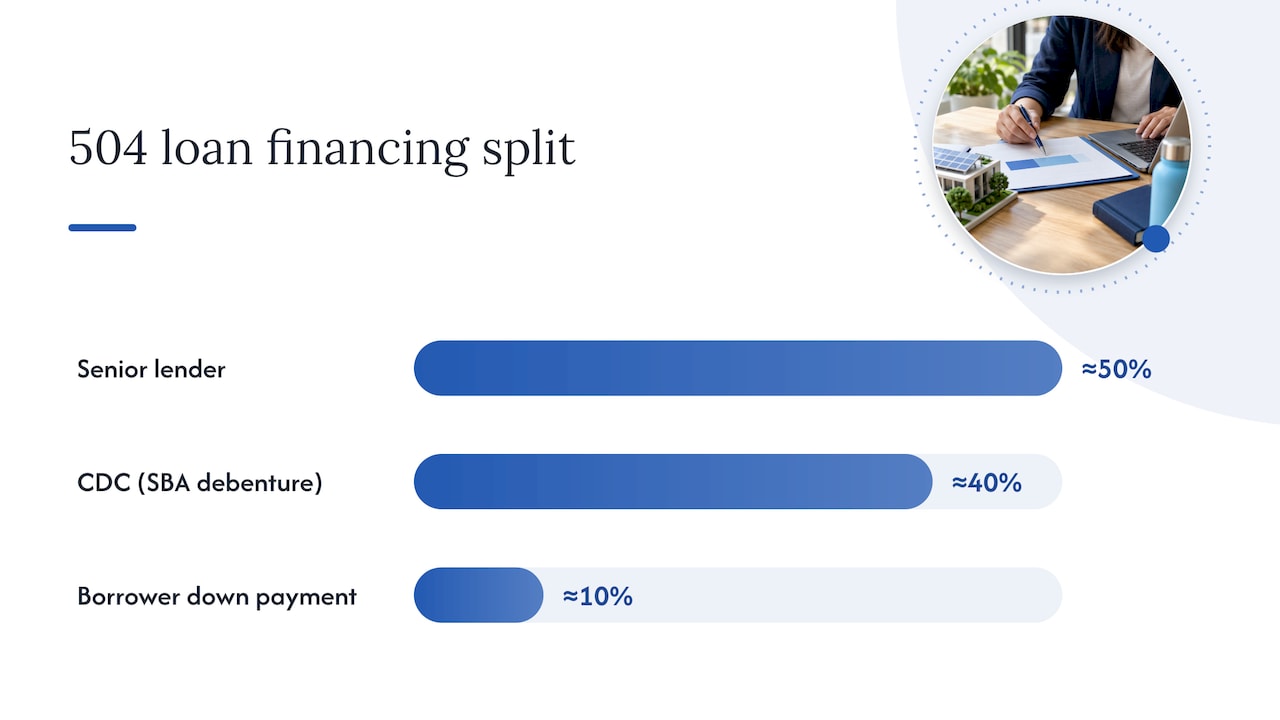
A standard SBA 504 loan splits financing three ways: a senior lender typically covers around 50% of project costs, a CDC debenture backed by the SBA covers a significant portion, and the borrower contributes a down payment, often as low as 10% for qualifying projects. For Energy Public Policy Projects, the SBA’s contribution can now reach $5.5 million, well above the standard per-project limit for most other 504 uses.
Terms run long and rates are fixed for the life of the loan, which protects borrowers from rate volatility on major capital investments.
Green projects also carry a notable advantage:
Preparing well before you apply saves weeks of back-and-forth. Here’s a practical sequence:
Timelines vary, but a well-documented application with a completed energy audit in hand typically moves faster through underwriting than one missing baseline data. Processing fees apply as outlined on your CDC’s loan program page. The most common delay we see involves applicants soliciting contractor bids before the audit is complete, which forces costly revisions once the engineering report comes back with different specifications.
Your certified development company originates and packages the 504 loan, coordinates with your senior lender, and submits your file to the SBA. A CDC with direct experience in Energy Public Policy Projects understands which audit formats satisfy underwriters and can flag gaps before they cause delays.
When vetting a CDC and an independent energy auditor, look for:
Sequencing matters here too. Audits come first, contractor selection follows, and bridge financing can cover timing gaps if construction starts before your debenture funds.
Pro Tip: Loop in your CDC before you finalize contractor bids, not after, since audit findings often change project scope.
With more than 35 years in SBA 504 lending, we at FBDC have built our process around getting small businesses through exactly this kind of documentation-heavy financing without unnecessary delay. Our approach centers on a few consistent strengths:
When you engage us for a green 504 project, expect a direct conversation about your energy audit status, your contractor bids, and your timeline before we file anything with the SBA.
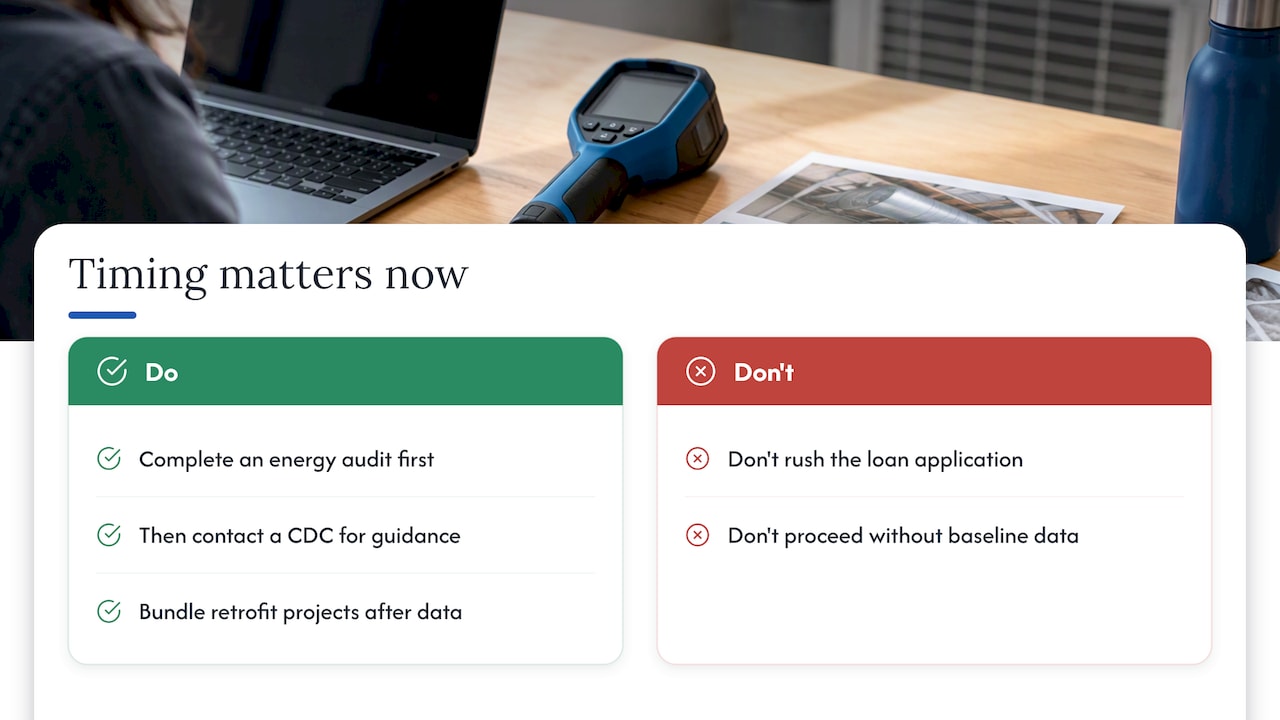
The removal of the aggregate cap creates a real window for businesses that have been sitting on retrofit plans because of financing limits. If you have been waiting to bundle a solar installation with an HVAC upgrade, this is the moment those projects stop competing for the same capped pool of SBA dollars.
That said, not every project needs to move immediately. If your energy audit isn’t complete, rushing the loan application before you have solid baseline data usually backfires. Start with the audit, then reach out to a CDC.
If you’re ready to move on a solar installation, HVAC replacement, or envelope upgrade, we can walk you through what qualifies and what documentation you’ll need before you talk to a CDC. Our SBA 504 process is built for small business owners who want a direct answer about financing, not a maze of back-and-forth.
Here’s what working with us typically looks like:
Visit our SBA 504 Loan Program page to see program details and start a conversation about your project. If timing is tight and you need to cover a gap before your debenture funds, our 504 Velocity Bridge Loan Program is worth asking about too.
SBA 504 rates are fixed for the life of the loan and set at the time your debenture is sold, so the rate varies by closing date rather than being a single published number. For current project-specific numbers, we recommend requesting a quote directly through your CDC’s loan program page.
As of March 2026 SBA policy, applicants for 504 and 7(a) loans must be U.S. citizens or U.S. nationals with a principal residence in the United States. Businesses owned in whole or part by foreign nationals, including green card holders in some cases, are not eligible under this updated requirement.
The process is documentation-heavy rather than inherently difficult: lenders expect financial statements, contractor bids, and for green projects, an independent energy audit, but a well-prepared application with a CDC’s guidance typically moves through underwriting without major obstacles. The biggest source of delay is usually incomplete energy documentation rather than borrower qualification itself.
For-profit U.S. businesses that meet SBA size standards and plan to use the loan for real estate, heavy machinery, or equipment with a long useful life generally qualify, provided ownership meets current citizenship and residency requirements. For Energy Public Policy Projects, your project must also meet one of the three green thresholds: a 10% energy reduction, 15% on-site renewable generation, or qualifying sustainable design practices.
For readers who want to verify these rules directly, the SBA’s own announcement and procedural notice are the most reliable sources, along with the program’s official landing page and a focused technical explainer on energy documentation requirements.

