.svg)
.svg)
.svg)
An SBA 504 loan is the strongest option for a profitable small business buying or improving its own commercial space, since it pairs a 10% down payment with a fixed rate on nearly half the project cost. It fits established, owner-occupied operating businesses best. It is not built for rental property, working capital, or businesses that won’t occupy most of the building.
TL;DR:
- The borrower must occupy at least 51% of an existing building or 60% of new construction with a clear plan to expand occupancy for an SBA 504 loan.
- The standard down payment is 10%, rising to 15% for startups or special-purpose properties, and 20% if both conditions apply.
- The SBA 504 financing covers purchasing, construction, renovations, and equipment with a useful life of 10 years or more, but excludes working capital and rental-only investments.
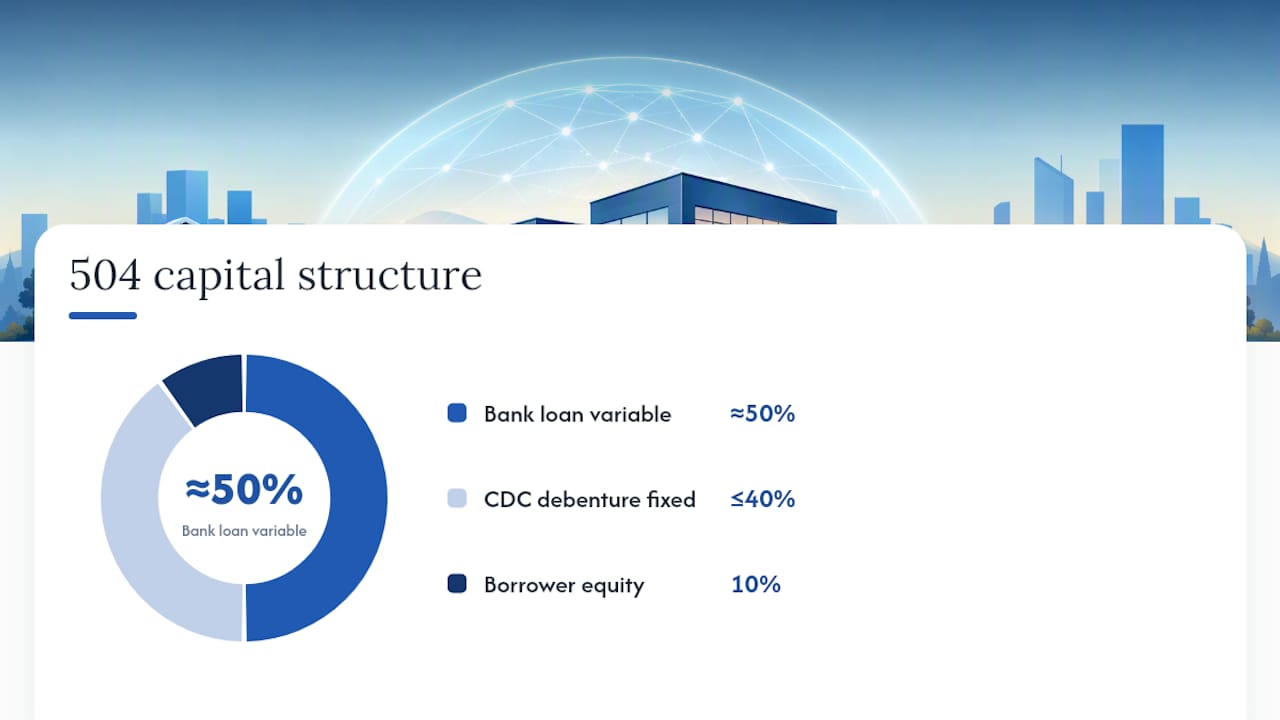
- The total project financing is split into about 50% from the bank, 40% from the CDC debenture fixed-rate, and 10% borrower equity, with the CDC cap limiting project size.
- The application process typically takes 60 to 90 days, requiring well-prepared documentation, a coordinated approach, and often incurring fees for appraisal, environmental, and closing costs.
The SBA 504 loan is a long-term financing program built specifically for owner-occupied commercial real estate, ground-up construction, and equipment with at least 10 years of useful life. A Certified Development Company (CDC) issues a debenture, guaranteed by the SBA, up to $5 million for most projects and $5.5 million for manufacturers or projects meeting energy or public-policy goals. Terms run 10, 20, or 25 years.
The fixed rate on the CDC portion isn’t negotiated with a bank. It’s set through a public bond sale each month, which is why that piece stays fixed for the entire term rather than resetting like many bank loans do.
Owners typically choose 504 over SBA 7(a) loans or conventional commercial real estate financing for a few clear reasons:
Qualifying for a 504 loan comes down to four tests, and it’s worth running through them before you get attached to a specific property.
You’ll also complete a Personal Financial Statement (SBA Form 413) and sign a personal guarantee if you own 20% or more of the business.
The 504 program only finances long-life capital assets, not operating cash. Eligible uses include:
The program will not cover working capital, inventory, goodwill, or speculative rental investments. Refinancing existing debt secured by eligible real estate is allowed under specific SBA rules, but it has its own documentation requirements. Special-purpose properties, such as self-storage or car washes, generally push your required equity up because CDCs view them as harder to resell.
A 504 deal runs through three parties, not one lender.
The CDC debenture cap for qualifying projects is a meaningful ceiling for owners buying larger buildings or funding major construction, since it determines how much of your total project can carry a fixed rate.
The bank’s first mortgage is the part to watch closely, as understanding how lenders evaluate your mortgage can help you anticipate their requirements and improve your approval chances. It may carry its own reset schedule, balloon payment, or refinancing requirement down the road, even while your CDC piece stays fixed and fully amortizing.
Getting from application to closing goes faster when you treat it as a coordinated process between your bank and your CDC, not two separate applications.
Pro Tip: Send your CDC a complete package on the first submission, including accurate occupancy projections and any environmental or appraisal reports you already have. Incomplete files are the single biggest cause of delay once underwriting starts.
Most 504 closings take 60 to 90 days or longer, mainly because three parties (bank, CDC, and SBA) all need to sign off before funding. Appraisal delays, environmental reviews, and incomplete documentation are the usual culprits behind a slower close.
Expect these costs on a typical deal:
Your monthly payment reflects two separate amortization schedules: a fixed, fully amortizing CDC payment and a bank payment that may include its own rate reset down the road.
The 504 program has real limits worth weighing before you apply.
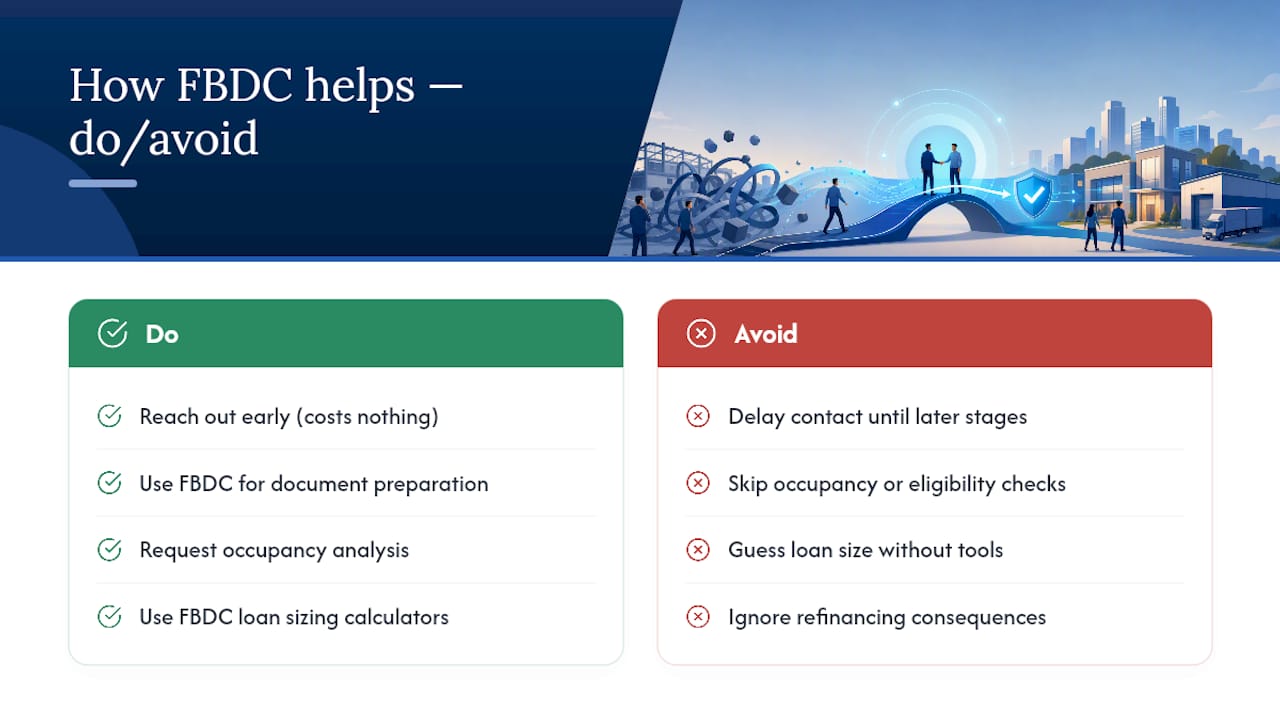
We have worked extensively in SBA 504 lending for many years and have coordinated numerous bank and CDC packages, gaining experience with many ways a deal can stall. We help with document preparation, occupancy analysis, refinancing questions, and loan sizing through our own calculators. If you’re weighing whether your project fits, reaching out early costs nothing and often saves weeks later.
Fbdc built its six-step process specifically to keep bank and CDC coordination from becoming your problem. From your first call, we review your property, your financials, and your occupancy plan, then map out realistic equity and timeline expectations before you sign anything with a lender.
This approach provides a single experienced point of contact managing both sides of the capital stack from application to funding, improving coordination. That coordination is where most 504 delays actually happen, and it’s the part FBDC has spent over three decades refining. If you’re ready to see what your project could look like under a 504 structure, visit FBDC’s SBA 504 loan program page to start your consultation, or run your numbers first with the 504 loan calculator.
Confirm current program rules directly on the SBA’s 504 loan program page, and locate a certified lender near you through the SBA’s CDC finder before you submit an application anywhere.

