.svg)
.svg)
.svg)

If you need working capital or flexible terms, look at an SBA 7(a) loan. If you are buying real estate or heavy equipment, the SBA 504 program fits best. If you are a startup needing a smaller amount with hands-on support, a microloan through a nonprofit intermediary is often the easier path. Which one works depends on your project, your financials, and the documentation you can provide.
TL;DR:
- Microloans up to $50,000 are easiest to qualify for, especially for startups or small businesses with limited credit history, but approval varies by intermediary.
- SBA 7(a) loans can go up to $5 million and are flexible for working capital, real estate, and debt refinancing, with final credit decisions made by participating lenders.
- SBA 504 loans are limited to fixed assets like real estate and equipment, often require a low down payment around 10%, and are managed through Certified Development Companies.
- Borrowers should ensure full ownership disclosure, complete exhibit packages, and realistic cash-flow projections to avoid delays in underwriting.
- Non-SBA financing options like merchant cash advances lack transparent costs and should be compared carefully against traditional SBA and bank loans.
Each direct loan program serves a different purpose, and knowing the distinctions upfront saves time.
The SBA 7(a) loan program is the SBA’s primary loan guarantee product, and it can be used to acquire real estate, refinance debt, or cover other business needs. Maximum loan amounts can reach up to $5 million, and the loans are delivered through participating lenders who evaluate your application and decide which 7(a) variant fits. The lender, not the SBA directly, makes the final credit call.
The SBA 504 loan program provides long-term, fixed-rate financing for major fixed assets like commercial real estate and heavy machinery. It is not designed for working capital or inventory purchases. A Certified Development Company, or CDC, manages the application and works alongside a conventional lender to structure the deal.
Microloans, covered under the SBA’s microloan program, go up to $50,000 and are administered by SBA-funded nonprofit intermediaries rather than banks. These loans work well for startups and very small operations that need modest capital plus some technical guidance.
Quick reference for what each program covers:
None of these programs overlap perfectly. A 504 loan will not fund payroll, and a microloan will not cover a warehouse purchase.
Before applying, screen your business against a few baseline requirements shared across SBA programs, then check the specifics for your target loan.
Every SBA-backed loan requires a for-profit business, operation within the eligible size standards, and a demonstrated ability to repay from cash flow. Beyond that baseline, each program adds its own thresholds.
Lenders will also want full ownership disclosure and a documentation package that typically includes tax returns, financial statements, and a business plan. Startups should expect closer scrutiny of projections, since there is no operating history to lean on, a pattern outlined in guidance on startup loan documentation requirements.
Start by identifying the right point of contact for your program: SBA Lender Match for 7(a) loans, a local CDC for 504 financing, or an approved intermediary for a microloan.
For 504 loans specifically, expect to complete Form 1244 along with supporting exhibits such as personal financial statements and projected income statements. Timelines vary, but a complete package with no missing exhibits moves faster than one that requires repeated follow-up. An experienced CDC or lender who knows the exhibit list cold can shave real time off the process.
Loan amounts and costs differ sharply by program, so it helps to compare them side by side before you commit to an application.
The average SBA microloan is about $13,000, which shows how different this option is in scale from a 504 or 7(a) real estate deal. Collateral and personal guarantees are common across all three programs, and recent SOP updates have adjusted refinancing rules for 504 loans, so it is worth checking current program notices before assuming older terms still apply.
Not every financing offer that looks like a business loan works like one. Sales-based products, often marketed as merchant cash advances, are not the same as a term loan and usually lack clear APR disclosure, which makes true costs hard to compare.
Legitimate alternatives to a direct SBA loan include a business line of credit, a non-SBA term loan from a bank, or a state-run program funded through the Treasury’s SSBCI initiative, which can fill gaps when private financing falls short.
Pro Tip: Ask every lender to state the annual percentage rate in writing before you compare offers.
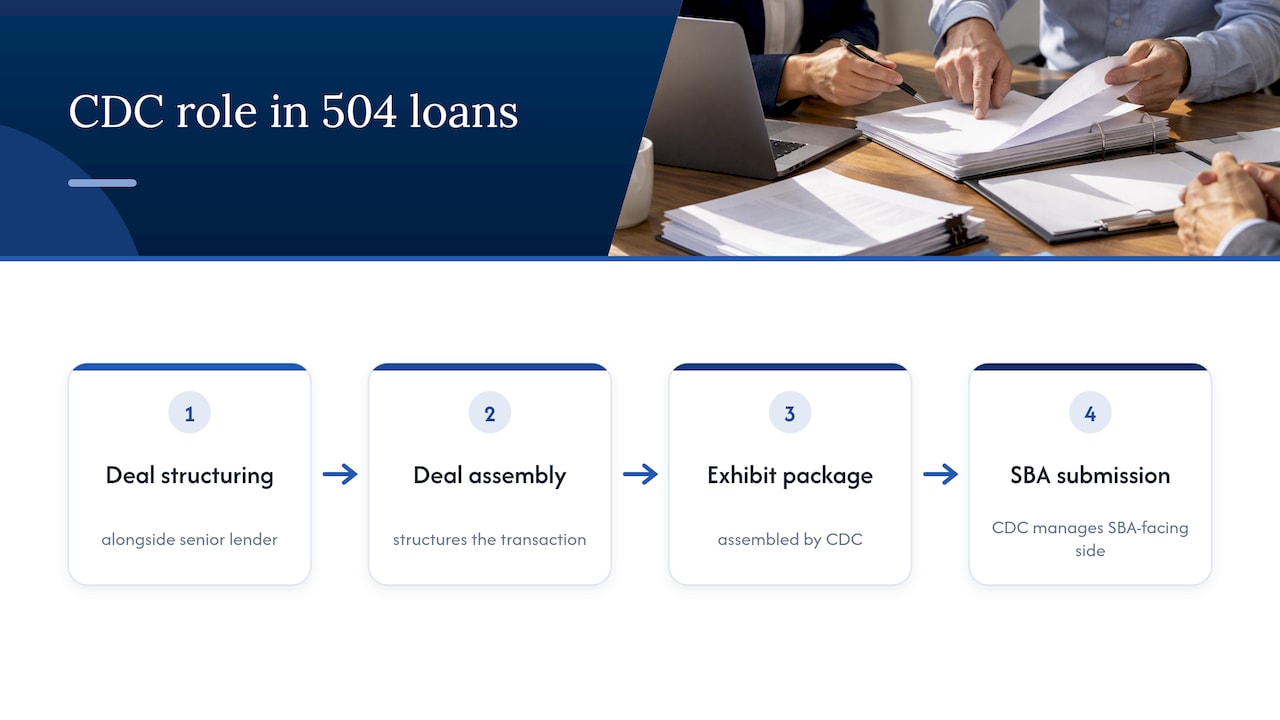
A Certified Development Company does more than process paperwork on a 504 loan. It structures the deal alongside your senior lender, assembles the exhibit package, and manages the SBA-facing side of the transaction, which is often where delays start when a borrower goes it alone.
Before choosing a CDC, ask about typical turnaround time, fee transparency, and whether they can walk you through a comparable past project. A Certified Development Company typically has significant experience as an SBA 504 lender, working with for-profit businesses that need real estate or equipment financing but may not fit conventional bank criteria. That kind of program-specific focus tends to reduce the back-and-forth that slows down less experienced lenders.
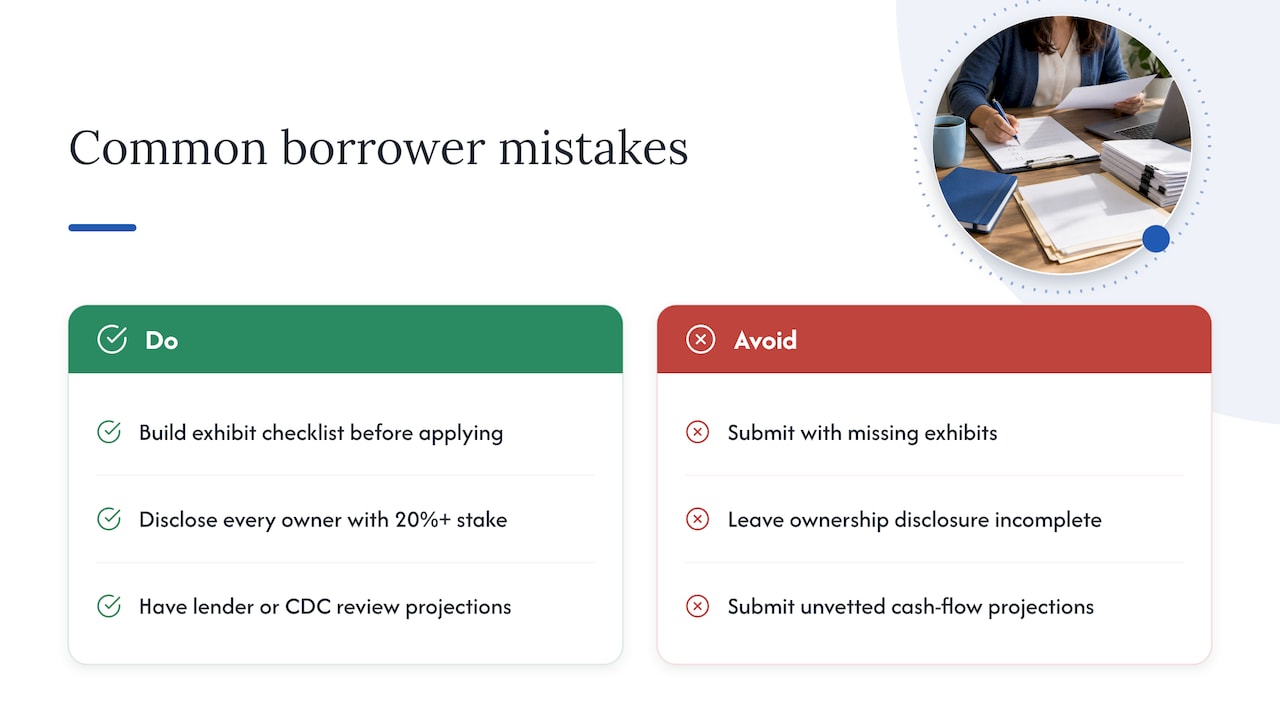
The most common mistakes I see are missing exhibits, incomplete ownership disclosure, and cash-flow projections that do not hold up under review. Each one stalls underwriting and forces a resubmission.
Fix them early: build your exhibit checklist before you apply, disclose every owner with 20% or more stake, and have a lender or CDC review your projections before submission.
— PHENYX
FBDC focuses on SBA 504 lending for small businesses buying, building, or renovating commercial real estate, purchasing long-life equipment, or refinancing existing debt into a fixed-rate structure. Beyond the core SBA 504 Loan Program, FBDC also offers a 504 refinance option, a bridge loan program for projects moving faster than standard 504 timelines, and a direct lending program with down payment assistance for qualifying borrowers.
Before reaching out, gather your recent tax returns, financial statements, and a description of the property or equipment you plan to finance. The lender’s team can then walk you through eligibility and next steps. Start by reviewing the SBA 504 Loan Program page or contact FBDC directly to discuss your project.
This article is general information, not a substitute for advice from a qualified financial advisor. Consult a qualified financial professional about your own circumstances before acting on anything here.
Microloans tend to be the most accessible option since intermediary lenders often work with startups and businesses with limited credit history, and the average microloan is about $13,000. Approval standards vary by intermediary, so requirements differ from one lender to the next.
Monthly payments depend on the interest rate and term length set by the specific lender, since rates are not fixed across all direct loan programs. A lender or CDC can calculate an exact figure once they know your program, term, and rate.
Credit requirements are set by the individual lender or intermediary rather than a single SBA-wide minimum, so approval odds vary by program and by lender. Borrowers with lower scores often have better luck with microloan intermediaries, who tend to weigh the full financial picture rather than a single score.
An EIN alone does not qualify a business for a direct loan. Lenders still require full financial documentation, ownership disclosure, and a demonstrated ability to repay, regardless of whether the applicant is a sole proprietor or an incorporated entity.

