.svg)
.svg)
.svg)
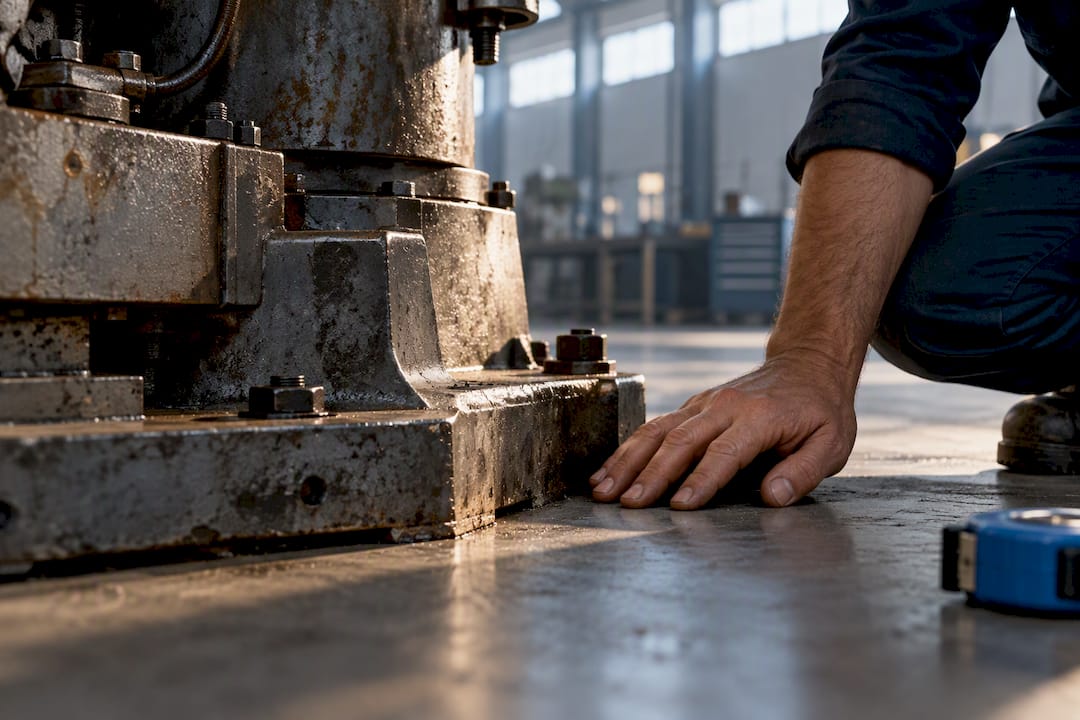
Most equipment loans run 2 to 10 years, with the majority landing in the 3 to 7 year range. Term length depends almost entirely on how long the equipment is expected to last. For qualifying long-lived assets like heavy machinery, the SBA 504 program extends fixed terms out to 10, 20, or even 25 years, giving capital-intensive businesses a way to match debt to the equipment’s real working life instead of an arbitrary bank cutoff.
TL;DR:
- Equipment with shorter useful lives like office and IT assets typically have loan terms of 2 to 5 years, while long-lasting machinery can qualify for up to 25 years through SBA 504 loans.
- Lenders base the financing term on asset depreciation, creditworthiness, collateral condition, and lender type, with longer terms reserved for assets that generate revenue over decades.
- SBA 504 loans are ideal for heavy equipment with at least a 10-year useful life, offering fixed rates and maturities of 10, 20, or 25 years to match the asset’s earning potential.
- Matching the financing term to the asset’s actual productive years is crucial, as paying interest on equipment replaced early can lead to unnecessary costs.
- Shorter loan terms save on total interest but demand higher monthly payments, whereas longer terms provide lower payments but increase total interest paid.
Lenders size the equipment loan term to how long the asset will realistically stay productive, not to a fixed company policy. A commercial oven and a laser cutter don’t get the same repayment window, and neither should they.
Here’s how term length typically breaks down by category:
OnDeck’s guidance on equipment financing confirms this same pattern: office equipment clusters at the short end, heavy machinery and farm equipment stretch toward the long end. The oft-cited “average of 3 to 7 years” is really an average of two very different populations. A business financing laptops and a business financing an industrial press could both be told “average terms apply” and walk away with completely different deals. Knowing which bucket your equipment falls into before you talk to a lender saves you from anchoring on the wrong number.
Term length isn’t negotiated in a vacuum. Lenders build it around a handful of factors that either support a longer window or force a shorter one.
Pro Tip: Bring manufacturer specs, service contracts, and a professional appraisal to your first meeting with a lender. Documentation that proves extended useful life is often the single biggest lever borrowers have to negotiate a longer, more affordable term.
If you’re buying heavy machinery, manufacturing equipment, or another long-lived fixed asset, a standard bank term may not match how long that equipment will actually generate revenue. That mismatch is exactly what the SBA 504 program was built to solve.
You can see how this plays out for real machinery purchases in FBDC’s breakdown of using SBA 504 loans to buy equipment in Florida.
A loan and a lease can both put a piece of equipment on your floor next week, but they leave you in very different positions once the term ends.
The practical rule holds regardless of structure: match the financing term to how long you expect to actually use the asset, not to whichever option offers the lowest payment today.
Picking a term isn’t about finding the lowest monthly payment. It’s about finding the payment your business can sustain while not paying for equipment you’ve already replaced.
Bring manufacturer specs, maintenance records, and revenue projections to your lender conversation. Practitioner guidance consistently shows that lenders extend longer terms to borrowers who arrive with documentation proving the equipment will outlast a standard term.
Pro Tip: If a lender pitches you a balloon payment to keep monthly costs low, ask what the balloon amount will actually be in dollars, not percentages. A “manageable” 20% balloon on a $250,000 loan is a $50,000 payment due all at once.
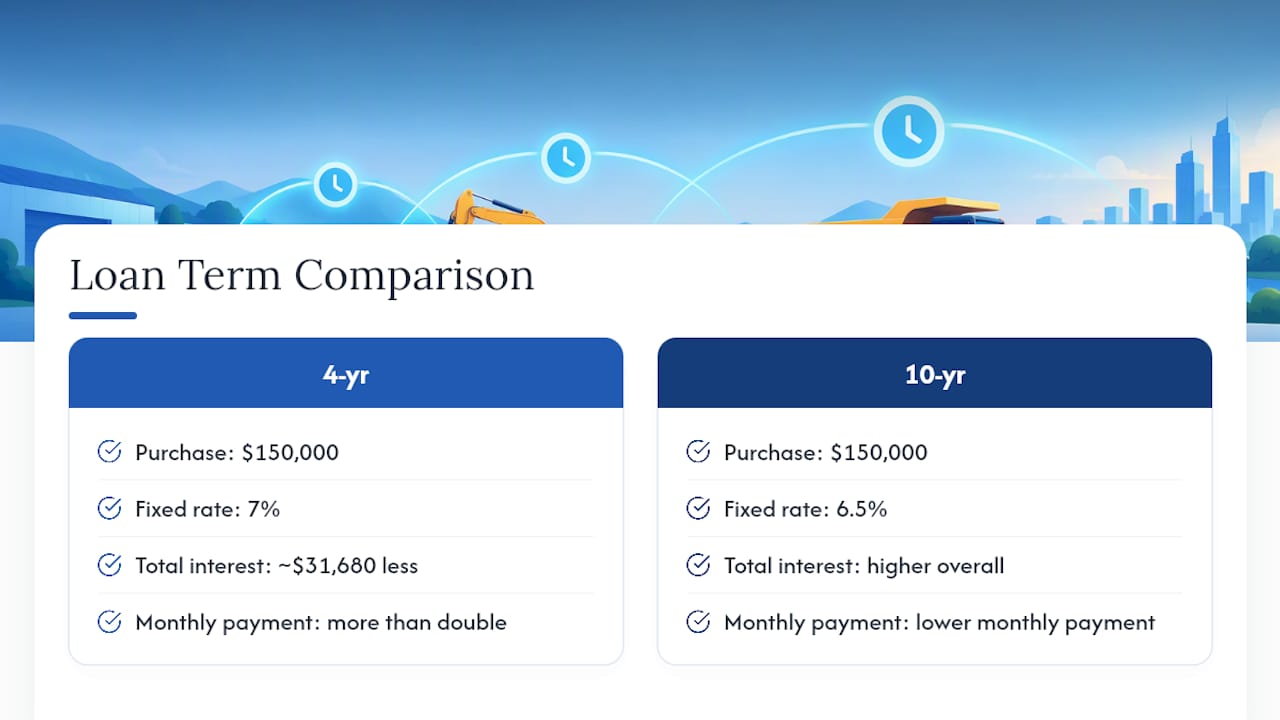
Here’s how the same $150,000 equipment purchase plays out across two common term lengths, assuming a 7% fixed rate on the short term and a 6.5% fixed rate on the long term (long-term SBA-backed structures often carry lower fixed rates given the collateral and guarantee involved).
The 4-year term costs roughly $31,680 less in total interest, but it demands a monthly payment more than double the 10-year option. For a business with tight seasonal cash flow, that difference can be the gap between comfortably covering payroll and scrambling every month. The longer term only makes sense when the equipment’s earning life genuinely supports a decade of payments. Financing a piece of machinery for 10 years that will be obsolete in six means paying interest on an asset you’ve already replaced.
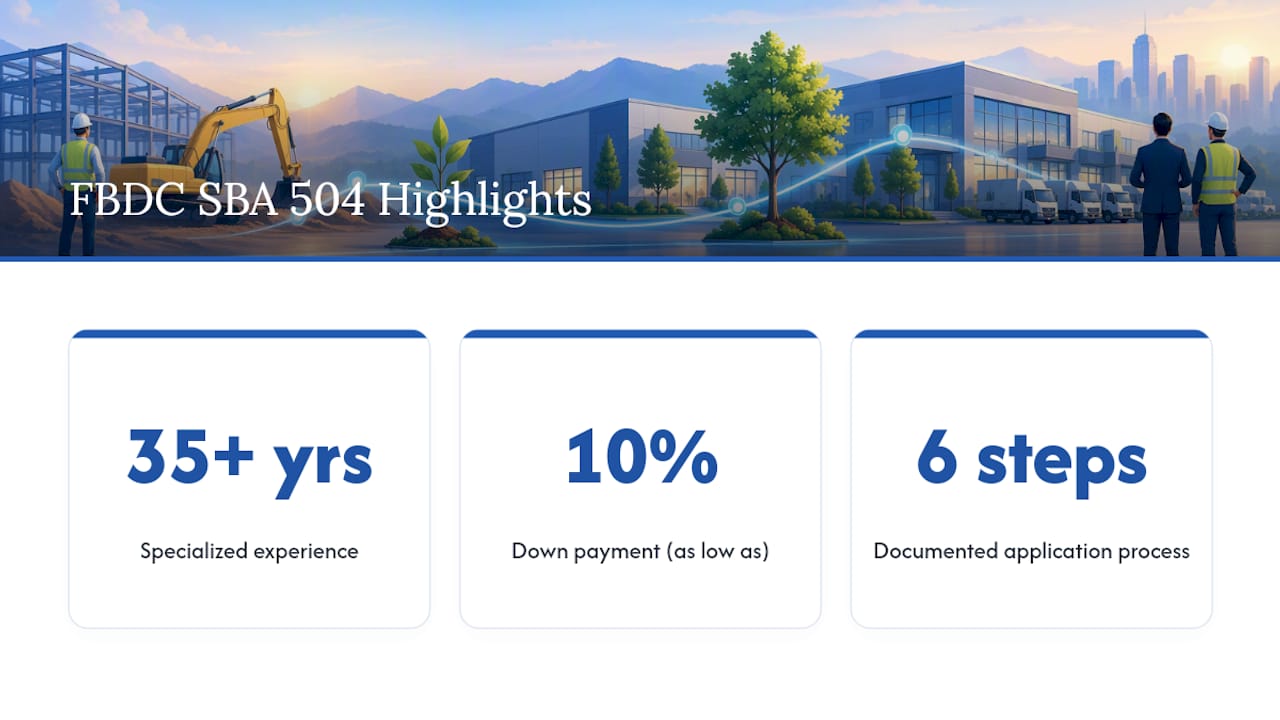
Florida Business Development Corporation has specialized in SBA 504 lending for more than 35 years, helping small businesses secure long-term, fixed-rate financing for real estate and heavy equipment. That kind of tenure matters in a program as procedurally specific as SBA 504, where documentation missteps can stall a project for months.
FBDC structures its 504 loans with down payments as low as 10%, paired with long-term fixed rates that give borrowers payment certainty for the full life of the loan rather than resetting risk every few years. The application process follows FBDC’s documented six-step process, designed to move qualifying borrowers from application to funding without the guesswork that often stalls equipment financing at traditional banks.
Longer terms earn their keep when the equipment itself is the growth engine, not just a purchase. Manufacturing lines, heavy machinery, and other assets with a decade or more of productive life justify a fixed, long-term structure because the payment stays predictable while the equipment keeps generating revenue. Shorter terms make more sense when the goal is minimizing total interest or preserving flexibility to upgrade equipment before it ages out.
The mistake I see most often isn’t picking the wrong lender. It’s picking a term based on the lowest monthly payment without checking whether that term actually matches how long the equipment will earn its keep. Do that math before you sign anything.
— PHENYX
If your business needs heavy machinery or another long-lived fixed asset, and a standard 5-year bank term doesn’t match how long that equipment will actually work for you, an SBA 504 loan gives you a fixed, long-term structure built for exactly that gap. FBDC brings over 35 years of SBA 504 experience to the table, with down payments as low as 10% and fixed rates that hold steady for the life of the loan.
Getting started is straightforward. Review FBDC’s proven application process to see the six steps from application to funding, gather your equipment specs and financial documents, and reach out to an FBDC advisor to check your eligibility. If your project involves acquiring both real estate and equipment, or you need bridge financing while your 504 loan closes, FBDC’s refinance and bridge loan programs round out the options worth asking about. Start by requesting a review of your project on the SBA 504 program page.
Most equipment loans run between 2 and 10 years, with 3 to 7 years being the most common range for standard commercial equipment. Longer-lived assets financed through SBA 504 can extend to 10, 20, or 25 years.
An equipment loan is financing used specifically to purchase business machinery, vehicles, or other physical assets, with the equipment itself typically serving as collateral. The borrower owns the equipment once the loan is paid off, unlike a lease.
A manufacturer buying a $150,000 industrial press might take a 7-year loan instead of a 4-year term, lowering monthly payments to match the equipment’s decade-long earning life. A business needing 25-year fixed financing for major machinery with a long useful life may instead pursue an SBA 504 loan through a lender like FBDC.
An equipment financing loan is a type of business loan used exclusively to purchase machinery, vehicles, or other physical assets needed to operate. Terms are structured around the equipment’s useful life, and rates and length vary by lender type, borrower credit, and loan program.
A shorter loan term means higher monthly payments but less total interest paid over the life of the loan, while a longer term lowers monthly payments at the cost of more interest overall. The right choice depends on whether your business needs lower payments now or wants to minimize total borrowing cost.

