


If you’re buying property or long-life equipment, an SBA 504 loan is often the best place to start, with financing of up to $5.5 million. For flexible uses, look at SBA 7(a) loans, bank term loans, or Florida’s SSBCI-backed programs. Your first move: contact a Certified Development Company (CDC) or your local Small Business Development Center (SBDC).
Fbdc
Finance Property and Equipment Growth
FBDC specializes in SBA 504 financing for small businesses acquiring real estate, heavy machinery, and equipment with low down payments and long-term fixed rates.
Most Florida expansion projects fall into several categories. The right one depends on what you’re buying, how fast you need the money, and how much cash you want to keep in the business.
Match the tool to the job. Say you want to buy a warehouse in Tampa, add a packaging line, and keep enough cash to hire more people. A term loan could cover the line, but a long-term, fixed-rate structure for the building keeps your monthly payment predictable. Renovating a leased space is different: it usually calls for a shorter-term loan, because lenders are wary of lending against improvements to property you don’t own.
Manufacturers have one more option worth knowing. Tax-exempt Industrial Development Bonds can finance land, buildings, or equipment, often at lower debt service than conventional loans.
Florida businesses can tap state-administered capital that most states can’t match in size. The core program is the State Small Business Credit Initiative (SSBCI), a multi-year federal program that sends funds through Florida’s participating lenders.
to expand small-business access to capital through participating lenders, and it is a real pool of money that Florida owners can ask about today.
FloridaCommerce administers SSBCI funding in partnership with state entities. Its first tranche, $142 million, is ready for deployment. The programs are designed to put affordable capital in the hands of very small businesses and underserved groups.
Here is what to know before you approach these funds:
State capital rarely works alone. A common pattern pairs a state-backed loan with a conventional or SBA loan, which can lower your equity requirement or fill the gap between what a lender offers and what the project costs.
To find a lender, check Florida’s published list of participating SSBCI lenders. It includes statewide and regional CDFIs and banks.
The 504 program was built for one purpose: financing major fixed assets with long-term, fixed-rate money. We work with these loans, so we’ll lay out the mechanics plainly.
The SBA’s 504 program page sets the rules. Loans reach up to $5.5 million. Eligible uses include purchasing or constructing buildings and land, building new facilities, and buying long-term machinery and equipment with a minimum remaining life of 10 years. Every 504 loan flows through a Certified Development Company, a nonprofit lending partner that packages the SBA portion alongside a bank loan. Our article on how CDCs cut bank risk and close faster explains that structure in detail.
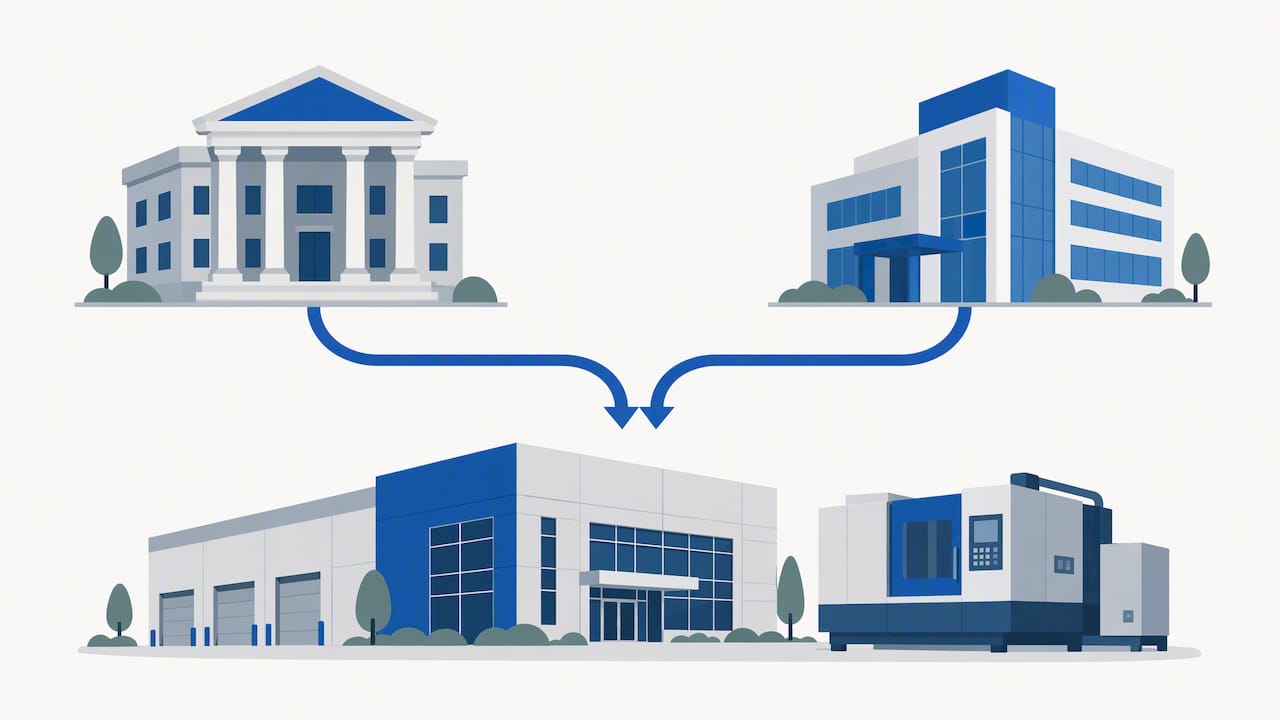
Many owners assume 504 is only for real estate. It isn’t. Equipment qualifies too, as long as it has at least a 10-year useful life, which makes 504 useful for a manufacturer modernizing a plant without draining working capital. We cover that case in our guide to equipment financing in Florida with SBA 504 and 10% down.
Here is how the programs differ in practice:
A quick comparison of two scenarios. If you’re buying a building to move your growing business out of a rented space, 504 fits because the asset is real estate and you want a fixed rate over a long term. If you need funds to stock up for a seasonal surge and hire staff, 504 doesn’t apply, because it doesn’t fund working capital or inventory, and 7(a) or a bank line is the better route.
Eligibility has two financial tests. Under the SBA’s published rules, your business must have a tangible net worth under $20 million and an average net income under $6.5 million after federal taxes for the two years before you apply. You must also be a for-profit business that meets SBA size standards.
Pro Tip: Ask your CDC to review your project before you talk to a bank. Knowing whether the asset qualifies, and how the SBA and bank portions will split, makes your first lender conversation shorter and more productive.
Lenders are looking for the same thing in every file: evidence that the business can repay the loan from the cash flow it already generates. Being ready ahead of time is the fastest way to shorten the process.
Expect underwriters to check these points:
Gather these documents before you call anyone:
Down payment matters as much as paperwork. That is a large part of why we recommend 504 for property and equipment projects. The typical alternative asks for substantially more equity upfront.
Timing depends largely on how organized you are. A complete package, a CDC that knows the process, and a lender who coordinates well all speed things up. We walk through the steps in our post on closing an SBA 504 loan in Florida in 60 to 90 days.
, so a project near that ceiling deserves extra preparation time, because larger files draw closer scrutiny.
If you are expanding by refinancing existing debt on an owner-occupied property, a separate structure applies. See our write-up on 504 refinancing for Florida businesses.
Start with the use of funds, because it eliminates options fast. Real estate and long-life equipment point toward 504. Working capital and inventory point toward 7(a), a bank line, or an online lender. Disaster recovery or underserved-owner status points toward Florida’s state programs.
Then weigh the rest of the picture:
Put these questions to every lender or CDC you speak with:
Pay attention to how they respond. A lender or CDC that understands 504 projects can explain the SBA and bank split without notes, knows your local market, and gives you a document checklist on the first call. Vague answers about structure or timing suggest you may lose time later.
A rule of thumb: choose long-term fixed-rate 504 financing when the asset will serve you for many years, and choose faster short-term money only when speed matters more than cost.
Your starting point depends on the program, but several organizations can help.
Follow this sequence:
Here is where we stand: for most owner-occupied property and long-life equipment projects, the 504 structure is hard to beat. The low down payment protects your cash, and the long fixed rate removes the guesswork from budgeting year after year. Plenty of owners delay a purchase because they think the equity requirement is out of reach, then find out it was never that high. If your project involves a building or heavy machinery, reach out and we’ll assess it with you.
Our SBA 504 Loan Program covers property and equipment, and we also offer a 504 Refinance Program, the FBDC 504 Velocity Bridge Loan Program, Direct Lending, and VetLoan Advantage Plus. Tell us about your project and we’ll show you which program fits.
It depends on what you’re buying. For property or equipment with a 10-year useful life, an SBA 504 loan is often the strongest fit. For working capital or mixed uses, SBA 7(a) loans and bank term loans are common choices.
The SBA sets the 504 maximum at up to $5.5 million. Loans go through Certified Development Companies and are used for major fixed assets like buildings, land, and long-life machinery.
Yes. Florida participates in the State Small Business Credit Initiative, which routes federal funds through participating lenders. FloridaCommerce administers the funding, and a published list of participating lenders shows where to apply.
Yes, as long as the equipment has a useful life of at least 10 years. This makes 504 useful for manufacturers and other businesses buying heavy machinery. It does not cover inventory or general working capital.

