


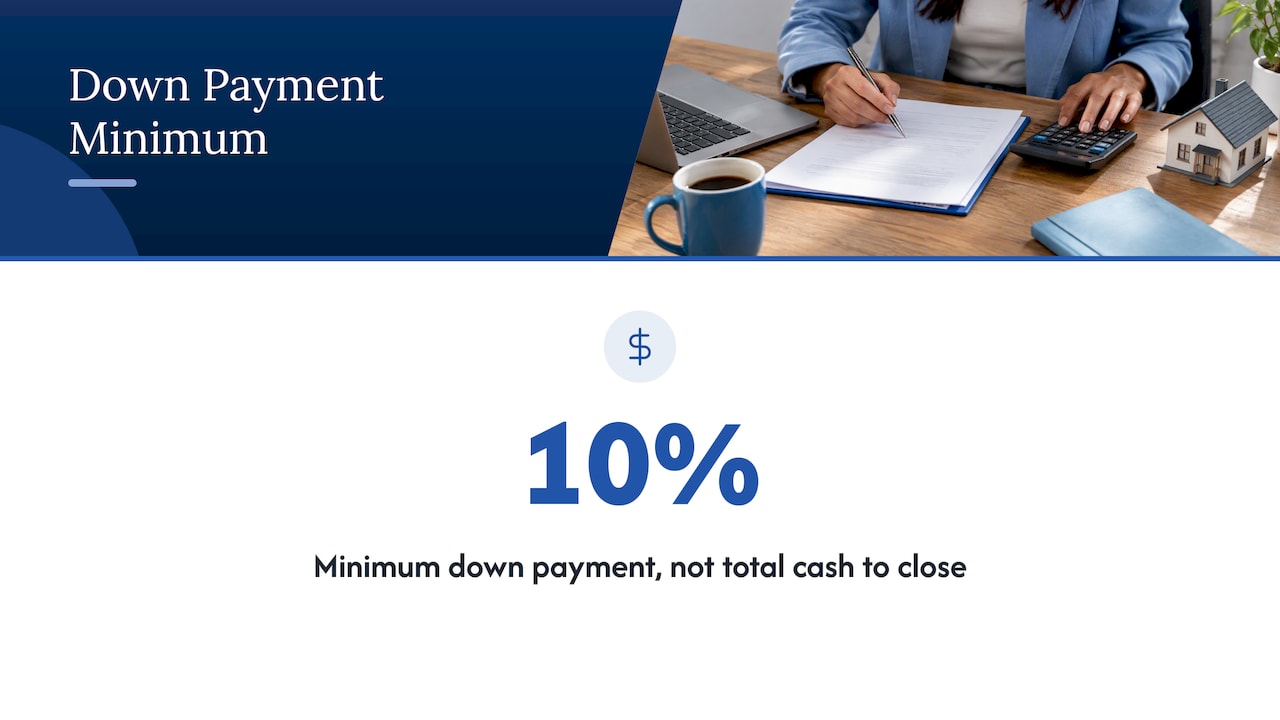
If your Florida business is buying, building, renovating or refinancing the property it operates from, you have two main routes: a conventional commercial mortgage from a bank or credit union, or an SBA 504 loan delivered through a Certified Development Company (CDC). Conventional loans are the most familiar. The 504 program is built for owner-occupants and can lower the cash you need at closing to as little as 10%, with a fixed rate on the long-term portion. This guide explains how each works, what lenders look at, and how to choose.
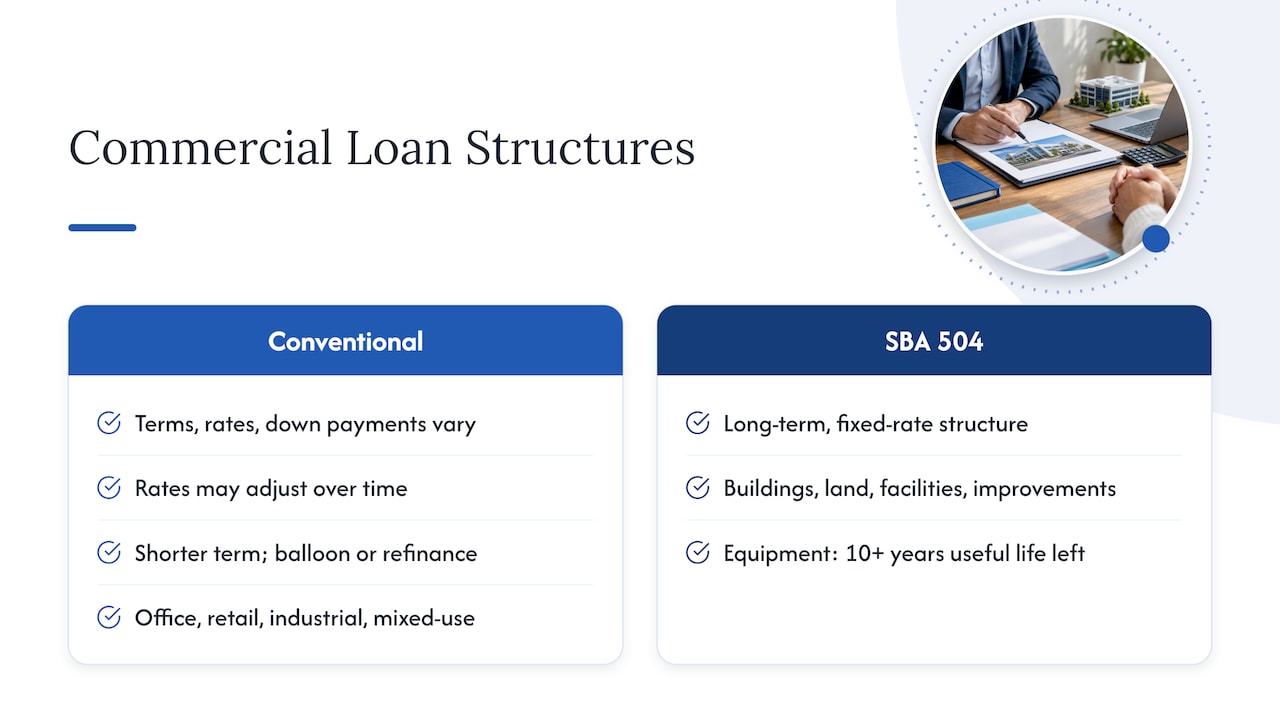
Conventional commercial real estate loans. Banks and credit unions across Florida offer these for office, retail, industrial, warehouse and mixed-use property. Terms, rates and down payments vary by lender and property. Many lenders set rates that adjust over time, and the loan often has a shorter term than the amortization schedule, which can leave a balloon payment or a refinance at the end.
SBA 504 loans. The 504 program is a long-term, fixed-rate structure for major fixed assets, not for working capital or inventory. According to SBA guidance, a 504 loan can finance existing buildings or land, new facilities, improvements to land and existing facilities, and long-term machinery or equipment with at least 10 years of remaining useful life.
A third category is investor financing for non-owner-occupied property, such as buildings you plan to lease entirely to others. Those loans are priced and underwritten around the property’s rental income. The 504 program does not serve passive or speculative real estate, so this guide focuses on businesses that will occupy the property.
The most important thing to understand is that a 504 is not a single loan. According to SBA lender guidance, a typical project includes:
Here is what that looks like on a hypothetical $2,000,000 project (property purchase plus eligible costs):
| Piece | Share | Amount |
|---|---|---|
| Bank first mortgage | up to 50% | up to $1,000,000 |
| CDC/SBA-backed loan | up to 40% | up to $800,000 |
| Borrower equity | at least 10% | at least $200,000 |
The same SBA page lists maturities of 25 years for real estate and 10 years for equipment, with fixed interest on the CDC portion. SBA said the 25-year debenture option was designed to lower monthly payments and help cash-flow management compared with shorter maturities. For an owner-occupant, payment stability and cash left in the business can matter as much as the headline rate.
The 10% figure is a minimum, not a promise. Per the SBA lender guidance, borrowers still need to budget for third-party costs and transaction expenses. Projects involving special-purpose properties, startups or a weaker operating history can require more equity than the baseline. Ask any lender, us included, to show you the full cash-to-close figure early, not only the down payment percentage.
SBA’s manufacturing page states a maximum 504 loan amount of $5.5 million. Limits can differ by project type and change over time, so confirm the current figure for your project with your CDC.
People often ask whether commercial lenders require 20% down. Many conventional lenders ask for a larger down payment than the 504 minimum, but requirements differ by lender, property type and borrower, so get quotes in writing. Use these criteria to compare offers:
| Criterion | Conventional commercial mortgage | SBA 504 |
|---|---|---|
| Down payment | Set by the lender, often higher | At least 10% of project cost |
| Rate | Fixed or adjustable, depending on lender | Fixed on the CDC portion |
| Term | Varies, may include a balloon | 25 years for real estate, 10 for equipment |
| Property use | Owner-occupied or investor | Owner-occupied by an eligible operating business |
| Process | One lender | Bank plus CDC, with SBA documentation |
| Best fit | Fast, simple deals; investor property | Owner-users who want to preserve cash and lock in payments |
The 504 adds paperwork and a second party. The trade is lower equity, stable payments on a large share of the debt, and long amortization. Compare the complete capital stack and fees, not only the advertised rate.
Per SBA eligibility guidance, the applicant must:
Nonprofit, passive and speculative businesses are excluded. A business that wants cash for payroll or inventory should look at other products, since the 504 funds fixed assets.
Ownership paperwork is broader than many applicants expect. SBA Form 1244 asks for ownership information on the applicant and, where applicable, the eligible passive company and operating company. Individuals with 20% or more ownership, officers, directors, managing members and key employees may need to provide separate information. Build a complete ownership chart before you apply.
For a deeper checklist, see our guide on four eligibility checks before a CDC and our occupancy checklist.
The Federal Reserve’s July 2026 Senior Loan Officer Opinion Survey found banks generally reporting easier standards for commercial real estate loans in the second quarter, while standards for several property categories remained toward the tighter end of their historical range. Do not assume better sentiment means a lighter review. Expect underwriters to examine:
What is the payment on a $1,000,000 loan? It depends on rate, amortization and term, so no single figure applies. Ask each lender for a payment schedule at the exact structure it is proposing, and compare 25-year fixed amortization against shorter terms.
The same structure serves many Florida business uses. We have written separate guides on warehouse loans with 10% down, industrial property financing and owner-occupied purchases. Typical uses include:
We have been doing SBA 504 lending for over 35 years, and the deals that go smoothly share one trait: the borrower brings the bank, the CDC, the appraiser and the closing attorney into the conversation early.
SBA describes CDCs as community-based nonprofit partners certified and regulated by SBA. A CDC is not a broker. It has a compliance and economic-development role, and an experienced one can structure the project around SBA rules before you commit to a property or equipment purchase that will not qualify. That is where we spend much of our time with Florida owners.
Three practical points from our side of the table:
If you need to move on a property before 504 funding is ready, a bridge option can cover the gap, which we describe in our guide to commercial bridge loans as a 504 exit.
— PHENYX
FBDC offers SBA 504 financing for acquiring, building, renovating or refinancing commercial real estate, and for equipment with at least a 10-year useful life. Our related programs include:
To see whether your project fits, start at fbdc.net and contact our team with the property or equipment you have in mind.
Having these ready lets a lender or CDC tell you quickly whether the project works and what structure fits.
Not always. Many conventional lenders ask for more than 10%, and the amount depends on the lender, property and borrower. An SBA 504 project requires at least 10% borrower equity, though special-purpose properties and startups may need more.
Lenders review business cash flow, the property, your history and your equity. The Federal Reserve’s July 2026 survey described standards as easier than the prior quarter but still toward the tighter end of their historical range for several property types. Complete documents and a realistic equity plan help.
Possibly, but startups may be asked for more equity than the 10% baseline, and the business must show qualified management and a feasible plan. Talk to a CDC early about how your structure would be treated.
Yes. SBA guidance covers long-term machinery and equipment with at least 10 years of remaining useful life. Working capital and inventory are not eligible.

