


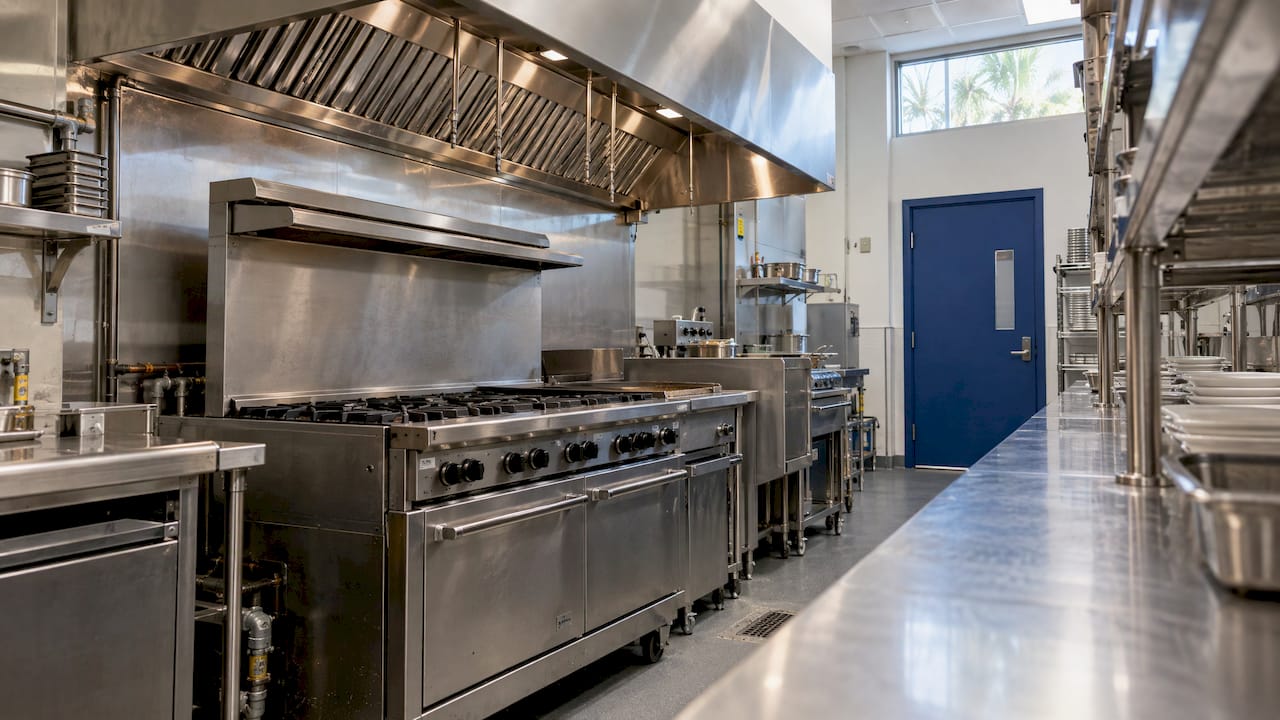
Yes, a restaurant can use an SBA 504 loan. It is built for owners who want to buy or build the building, renovate it, or purchase long-lived kitchen equipment, with a low down payment and a fixed rate on the long-term portion. It does not cover payroll, food inventory or other day-to-day cash needs. If you run a for-profit restaurant in Florida and want to stop paying rent to someone else, our SBA 504 Loan Program at FBDC is designed for exactly that project.
Fbdc
fbdc.net
Finance Your Restaurant’s Fixed Assets
FBDC specializes in SBA 504 financing for small businesses acquiring real estate, heavy machinery, and equipment with low down payments.
The SBA describes the 504 program as long-term, fixed-rate financing for major fixed assets. For a restaurant, that usually means one of these projects:
The soft costs of the project can be included too. Under 13 CFR §120.882, eligible costs can include directly attributable project expenses, a construction contingency reserve of up to 10%, essential professional fees, and repayment of interim financing including its points, fees and interest.
The SBA’s 504 page states that working capital and inventory are not eligible. The federal rules in 13 CFR §120.884 also list advertising and franchise fees as ineligible, and short-term equipment, furniture and furnishings generally are too, unless they are essential to the project and a minor part of it.
In practice, plan the dining-room chairs, smallwares and opening stock separately from the 504 budget. The loan is for the building and the long-life assets that go in it.
A 504 project is financed with two loans plus your down payment. A standard 504 structure looks like this:
PieceShare of projectWho provides itFirst-lien loanAbout 50%A bank or other third-party lender504 loanAbout 40%A Certified Development Company (CDC), backed by an SBA-guaranteed debentureYour contribution10%You, the borrower
A CDC is a nonprofit organization certified by the SBA to make 504 loans in a local area. A debenture is the bond that funds the CDC’s portion. The SBA says the rate on that portion is pegged to an increment above the market rate for 10-year U.S. Treasury issues, so it is set when the debenture is sold and then stays fixed for the term. Treasury yields move daily, so ask for a current quote rather than relying on a rate you read online.
The same structure shifts when the project carries more risk. A startup, or a building that can only be used for one purpose, generally raises the borrower’s share to 15%. A project that is both a startup and a special-purpose property generally requires 20%. A restaurant building can fall into the special-purpose category when it is so specialized that it is hard to convert to another use, so confirm your classification before you set your cash budget.
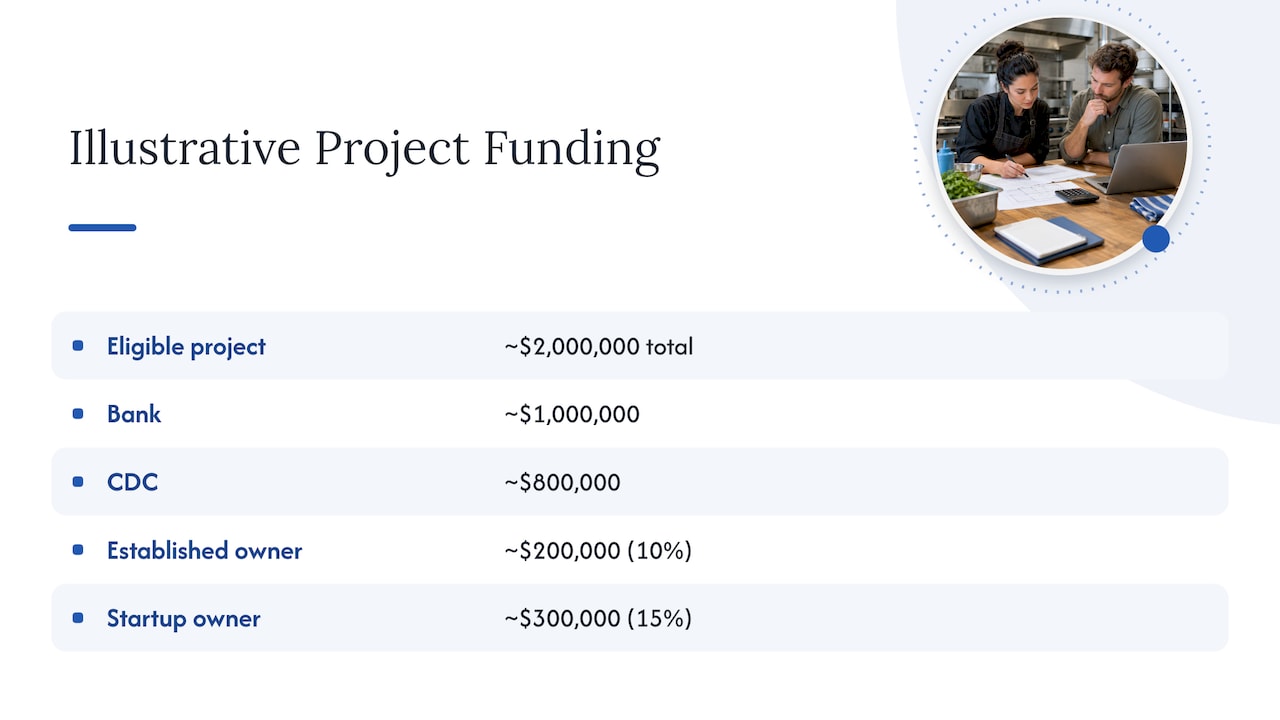
Suppose an established restaurant owner buys a building and finishes the kitchen for a total eligible project cost of $2,000,000. At the standard split, the bank funds about $1,000,000, the CDC portion is about $800,000, and the owner brings about $200,000. For a startup restaurant the same project would need about $300,000 from the owner at 15%. The figures are illustrative, and a real project depends on appraisal, costs and eligibility.
The SBA states a maximum loan amount of $5.5 million for the 504 portion and maturities of 10, 20 or 25 years. Most restaurant real estate projects use the longest term, because it lowers the monthly payment, while equipment generally fits the shorter ones.
The SBA says fees total approximately 3% of the debt and can be financed with the loan, so they do not have to come out of your pocket at closing. You can see our fee summary on the SBA 504 Loan Program page.
The SBA says an eligible borrower must be an operating, for-profit U.S. business that meets SBA size standards and is not an ineligible type of business. It also needs qualified management, a feasible plan, good character and the ability to repay.
This is the rule restaurant owners ask about most. Under 13 CFR §120.880, the small business must use the project property. The exception is an Eligible Passive Company, a separate entity that owns the real estate and leases it to your operating restaurant company. Many owners hold the building in a property LLC and the restaurant in an operating LLC, and that arrangement can fit the program.
The program is for owner-occupants, so a building you plan mainly to rent out to other tenants is a poor match. Our article on owner-occupied versus investment property explains how lenders look at the difference.
The SBA’s 2026 lender and development company SOP, effective October 1, 2026, states that direct and indirect owners of the applicant, and SBA-required guarantors, must meet the stated U.S. citizen or national and principal-residence requirements. Exceptions depend on the situation, so we walk owners through their ownership chart early. Our 2026 SBA update covers the citizenship changes.
The 504 program exists to build local economies, so your project has to meet a job requirement. For approvals on or after October 1, 2025, the SBA’s Federal Register notice set one job opportunity per $95,000 guaranteed by the SBA, with different thresholds for small manufacturers and energy-goal projects. Restaurants are labor-intensive, so a project that adds a kitchen or a second dining room often meets this naturally. Existing jobs can count in some cases, so ask your CDC how your staff is counted.
The federal rules bar certain projects, including those on foreign property and relocations that cut the moving business’s workforce by at least one-third unless specified economic and community-benefit tests are met. A restaurant moving to a larger building that keeps or adds staff is not the concern here.
New restaurants. A startup can qualify, but it brings the higher down payment described above and a closer look at your management experience and business plan. If you are opening your first location, the direct lending and down payment options on our Direct Lending Program page are worth a look alongside the 504 itself.
Equipment. Heavy machinery or equipment qualifies when it has at least 10 years of useful life. A loan for only a few pieces of movable equipment is not what the program is for, but equipment can be part of a real estate project or a larger fixed-asset purchase.
Veterans. Veteran owners can look at our VetLoan Advantage Plus, which is designed for veteran-owned businesses that need affordable financing with low down payments.
The 504 is built for property and long-life equipment, and it keeps your payment predictable with a fixed rate on the long-term portion. A 7(a) loan can also include working capital and inventory, which is why some restaurant projects that mix real estate with operating cash are weighed between the two. Our guide to 504 versus 7(a) lays out how each fits. If you are also weighing a bank mortgage, see how a 504 compares with a conventional commercial mortgage.
It also helps to understand the full menu of business funding before you commit to a project. This overview of business financing options shows where real estate loans sit among the others, and your accountant can help you plan how a payment fits your cash flow.
If you are building rather than buying, the interim period before the 504 debenture funds matters. Our guide to avoiding extra interim interest on 504 construction explains the timing, and our Velocity Bridge Loan Program is designed for 504 projects that need bridge financing.
Two changes matter for restaurant owners. The SBA’s refinancing rule took effect on November 15, 2024, removing the 50% cap on refinancing without expansion and lowering the substantially-all standard for refinancing with expansion from 85% to 75%. And the job-opportunity thresholds above apply to approvals from October 1, 2025. If you already own your building with a mortgage, see our SBA 504 Refinance Program.
Most restaurant owners we talk to know their lease costs and have a rough idea of what their building is worth. What they have not seen is how a 504 loan turns rent into equity with a payment that does not change on the long-term portion.
FBDC has more than 35 years of experience with SBA 504 lending. In that time we have learned that a smooth loan comes from a clear project, a complete file and early answers on eligibility, owner-occupancy and job creation. That is why we focus on guiding you through each step rather than handing you a checklist.
Our aim is a faster, more streamlined process with experienced staff who stay responsive. For a restaurant, that means a plan for the building, the kitchen and the down payment before you sign a contract.
PHENYX
FBDC specializes in SBA 504 lending for for-profit small businesses in Florida, with down payments as low as 10% and long-term fixed rates. We also offer refinancing, bridge loans, direct lending for smaller loans and a veteran program, so there is one team for the whole project.
If you are considering buying, building or renovating a restaurant location, start on our SBA 504 Loan Program page or look at restaurant property financing in Florida and how restaurant owners buy their building. Then schedule a consultation with our team through the FBDC website.
No. The SBA states that working capital and inventory are not eligible. The 504 finances buildings, land, renovations and long-life machinery or equipment, so plan operating cash separately.
A standard project needs 10% from the borrower. A startup or a special-purpose building generally raises that to 15%, and a project that is both generally requires 20%. Your final figure depends on how your project is classified.
The SBA states a maximum loan amount of $5.5 million with 10-, 20- and 25-year maturities. That figure applies to the 504 portion, and the bank’s first-lien loan is in addition to it.
The business must use the property, and the program is for owner-occupants rather than investors. Whether a second tenant fits depends on how much of the building you occupy, so review your plans with your CDC before you buy.

